
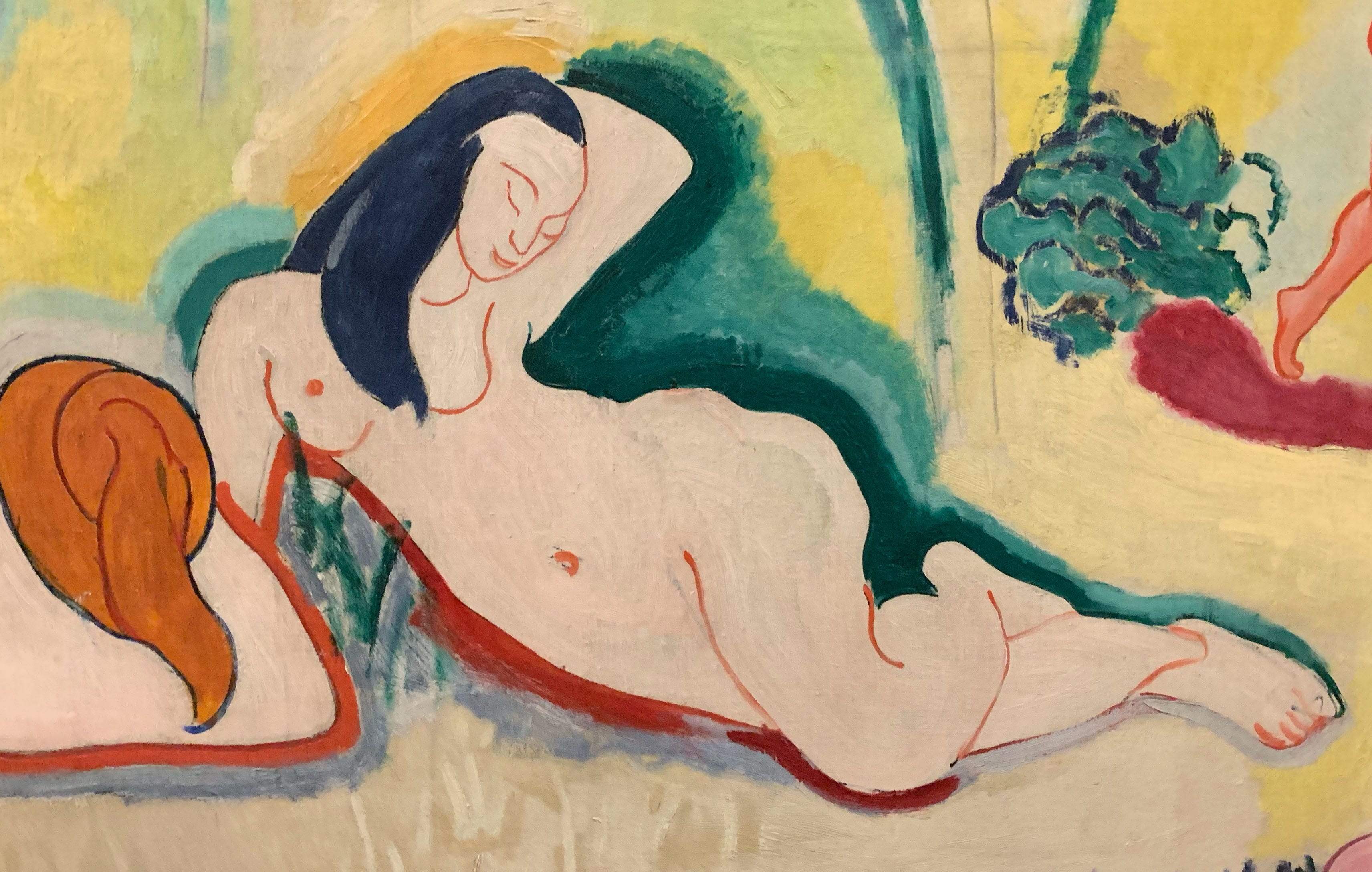
Henri Matisse painted and sculpted the female nude for decades—from his rowdy days as a Fauve, to his flowing Moroccan odalisques, to his late gouache cutouts.
Whatever the medium or style, Matisse always drew legs that were active and angular, contorted and curved. And time and again, he returned to one unusual pose that became a central image of his iconography.
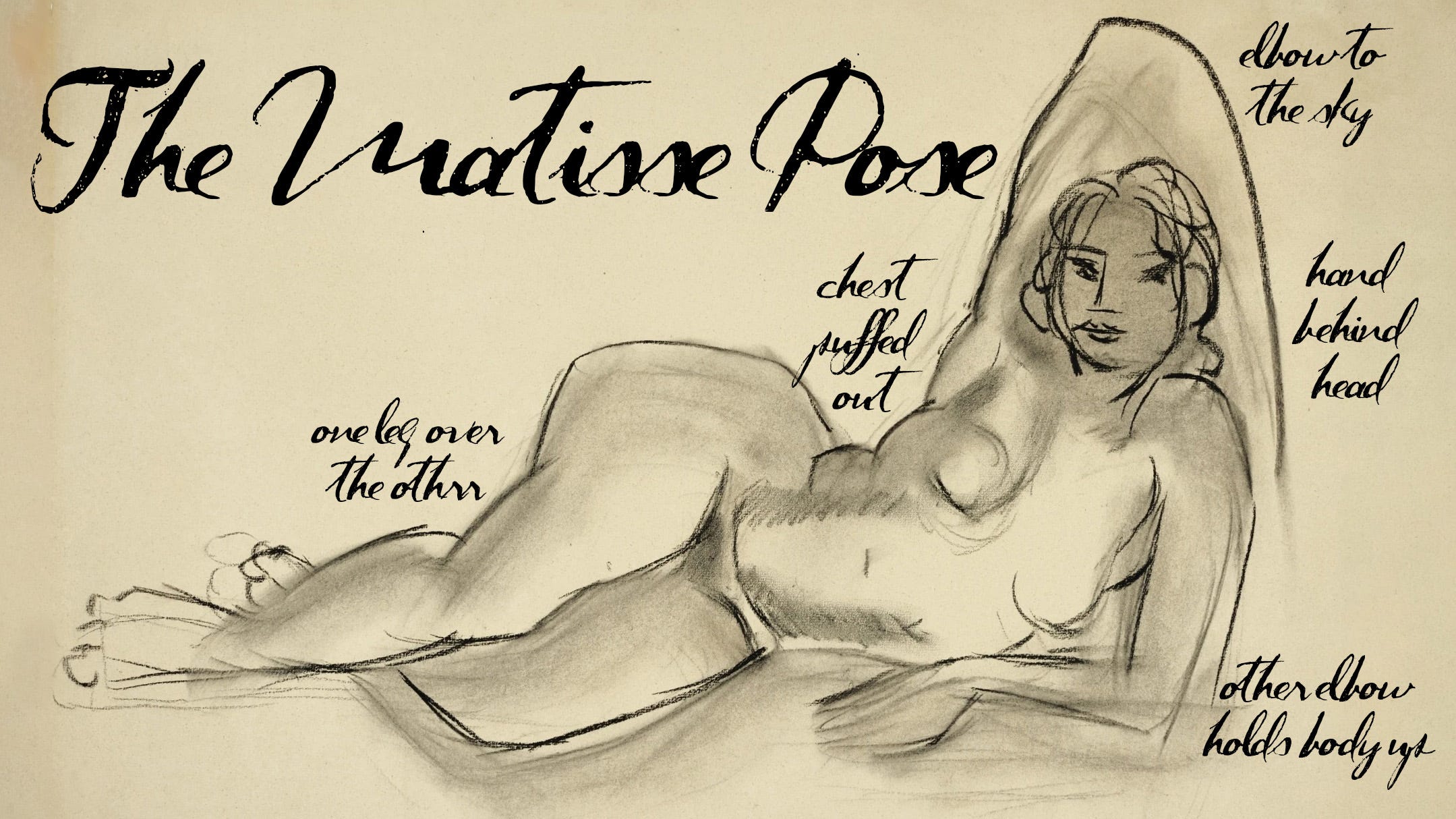
The pose is a sort of Matissean signature, albeit an unspoken one, since there seems to have been little written directly about it. HenriMatisse.org refers to it as having “one leg over the other and arm bent against her head.”
Given how much the French painter seemed to like the pose, and how often it shows up in his most loved masterpieces, I suggest it simply be called “the Matisse pose.”
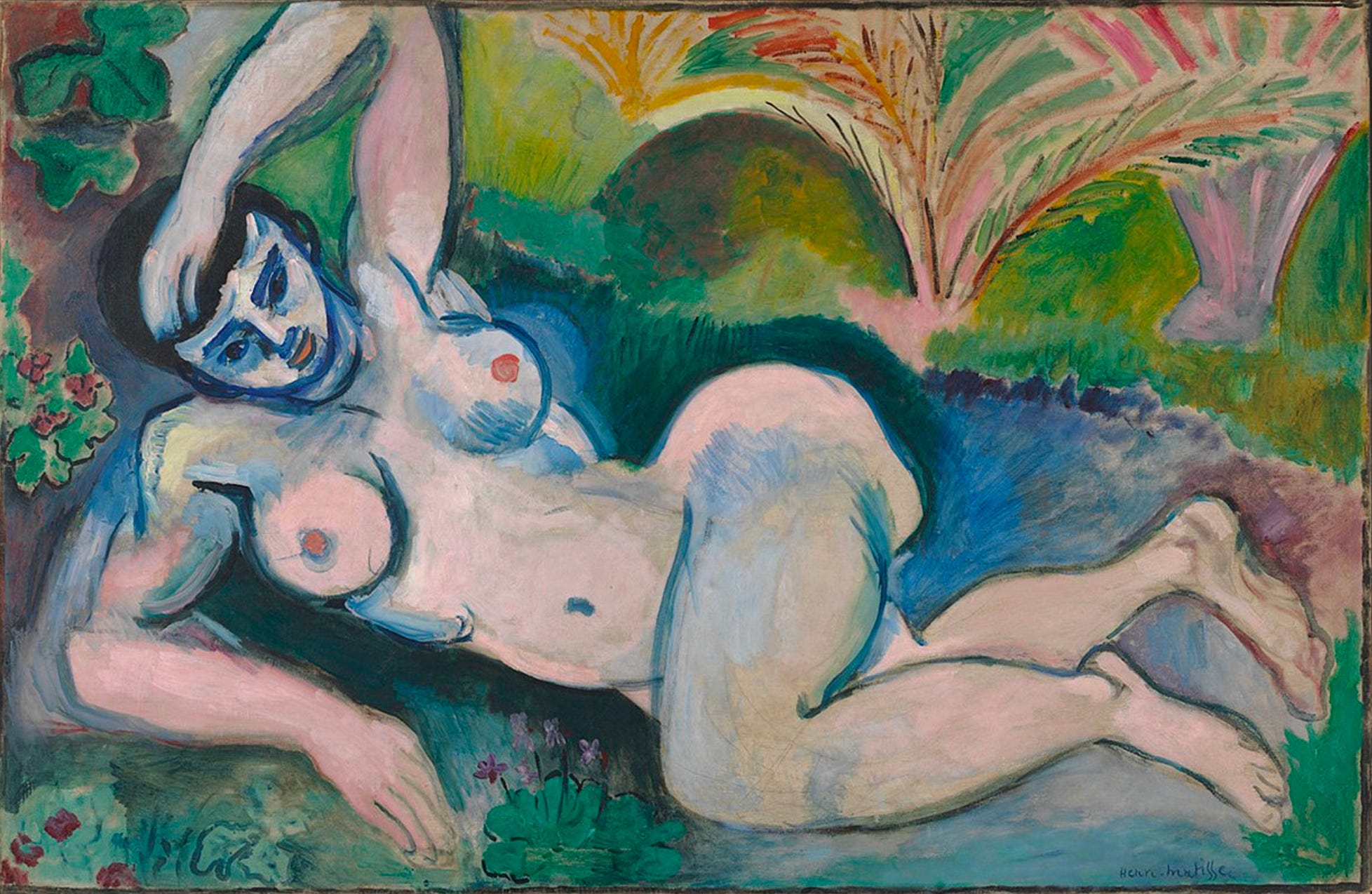
You will recognize it from the Blue Nude (Souvenir of Biskra), the 1907 canvas with a bulging female body at the Baltimore Museum of Art. This painting was based not on a live model, but on a clay sculpture of the same pose that Matisse was working on. This clay sculpture, we are told, fell to the ground and broke, prompting Matisse to switch his energy to the painting instead.
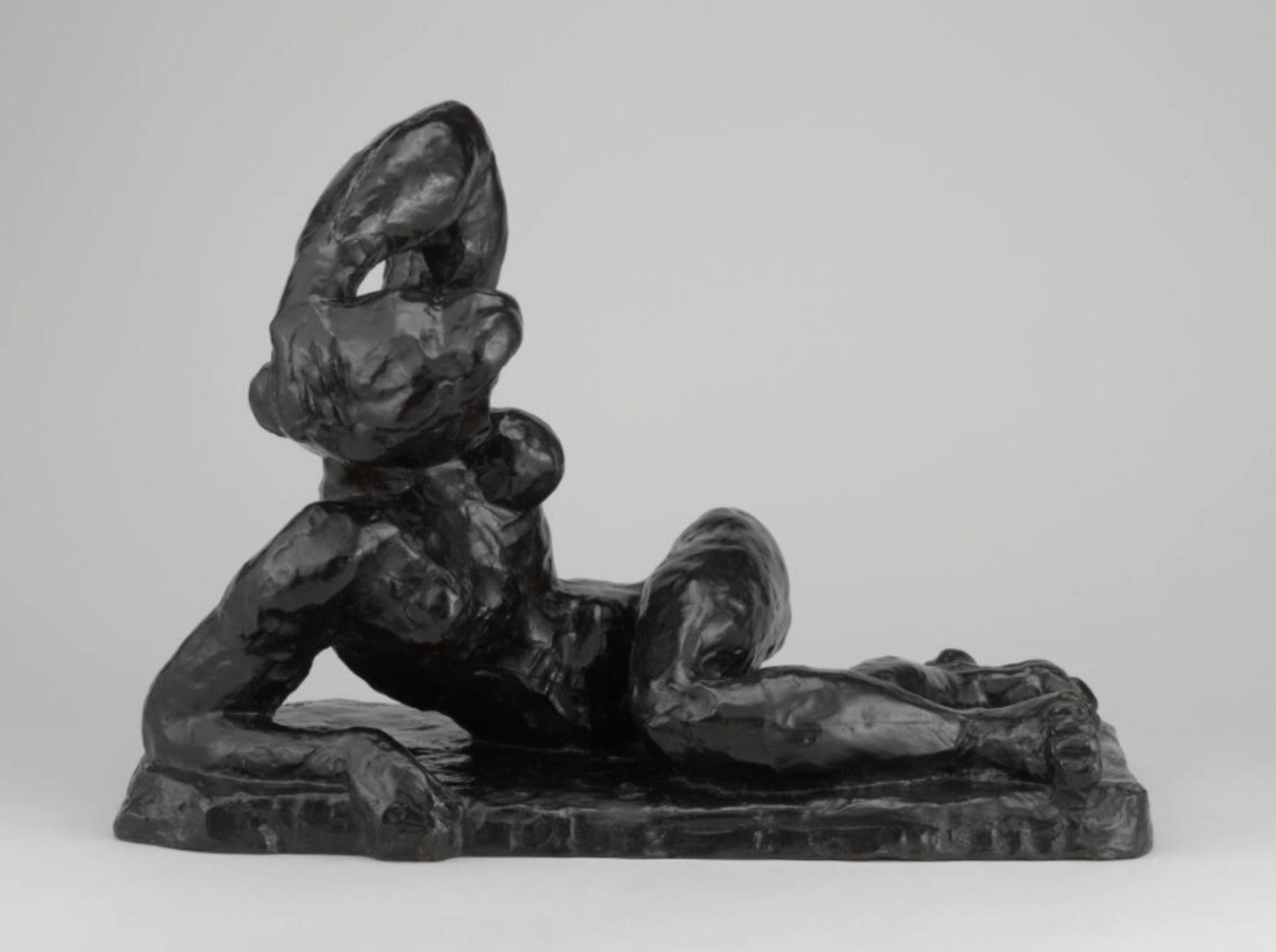
Here is final iteration of the sculpted version, Reclining Nude I (finished 1907, cast in bronze at later dates). The sculpture is also known as Aurora.
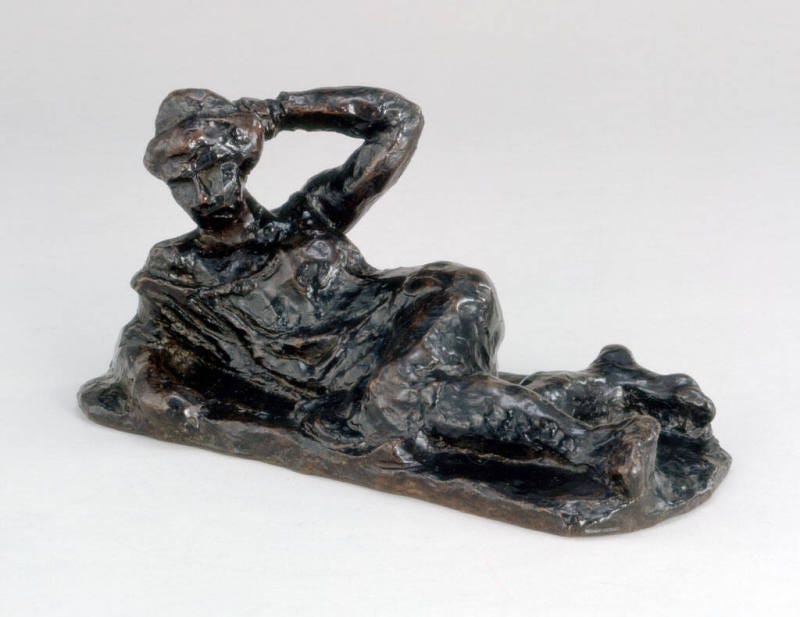
It’s worth pausing here to note that Matisse sculpted the same pose, but in a clothed version, a year earlier. This is Reclining Figure with Chemise (1906).
Later nude sculptures with the same pose include Reclining Nude II (1927), at the Metropolitan Museum of Art, and Reclining Nude III (1929) at the Baltimore Museum of Art.


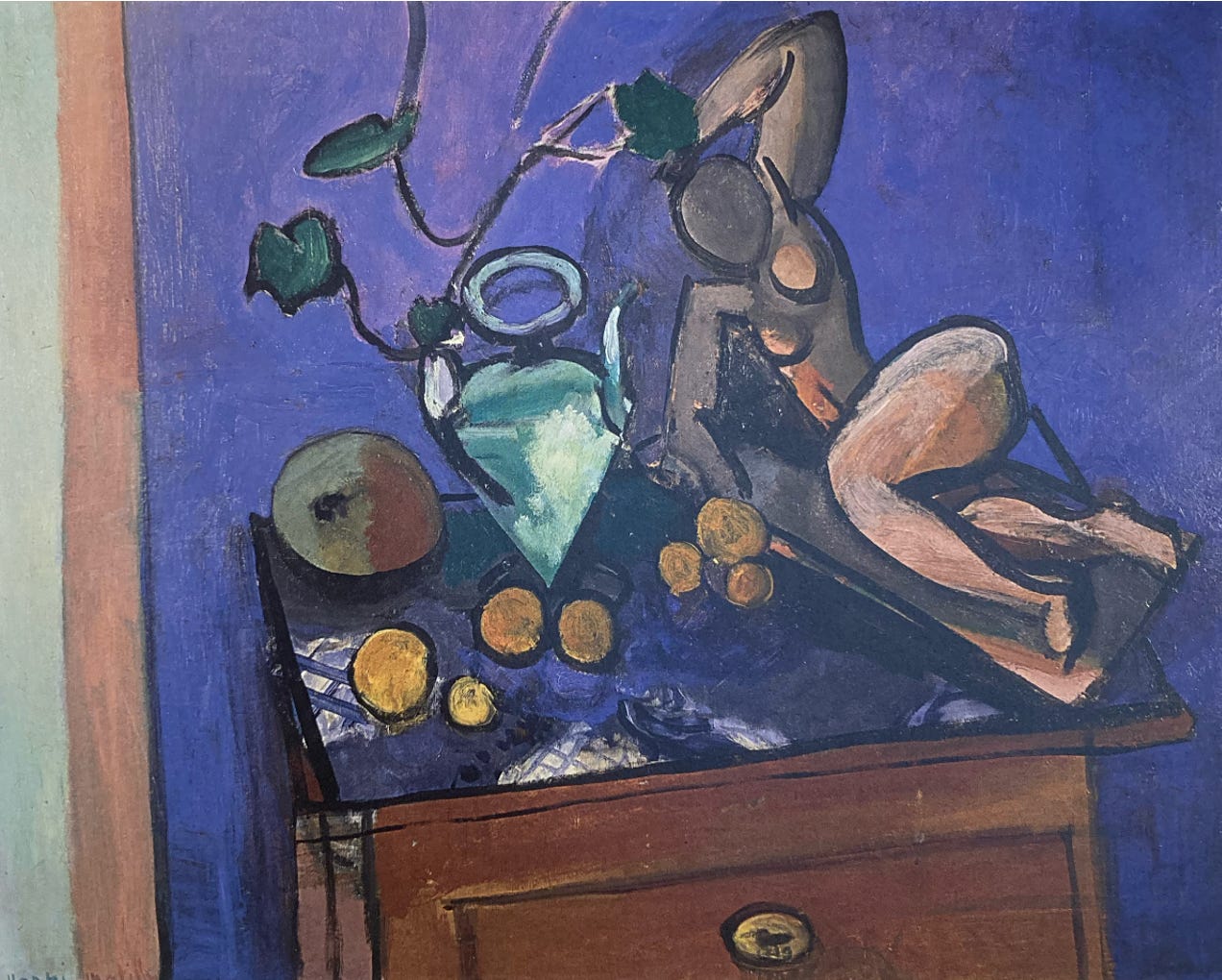
That the Blue Nude painting was fashioned from a previous artistic vision, rather than from life, speaks to how the pose is as conceptual as it is literal, concerned more with artistic license than anatomy. Matisse would pull the pose out of paintings and make sculptures of it, and then make sculptures that appeared in still life paintings.
The pose continues to charm and confuse us because of its ambiguity. Is it active or passive? Awkward or assertive? Relaxed or uneasy? Suggestive or guarded? It’s a pose you might fall naturally into as you turn to talk to your partner in bed. Yet it could also double as a yoga stretch that requires a deep breath.
Origins of an Odd Pose
Those who study or dabble in art history will identify a few traditions that collide in Matisse’s pose:
The reclining female pose in European oil painting, either nude or otherwise suggestive, which includes both the goddess Venus as well as the harem-inspired odalisque.
The Sleeping Ariadne figure, a Greco-Roman tradition.
The intentionally distorted figure in African sculpture, which Matisse and other European painters began to collect in the early 1900s.
The personal flair and disposition of Matisse as a draftsman, which is marked by bulging forms, winding lines, and the female figure in asymmetrical poses.
Let’s start in Europe.
1510: This Sleeping Venus has long been considered a Giorgione picture that Titian finished after Giorgione’s death. In recent years scholars have wondered if it should be primarily attributed to Titian. Either way, Titian would go on to paint what may be the defining image of the genre, Venus of Urbino. I will prove its lasting power by not feeling the need to post the image here. (But it’s here.)
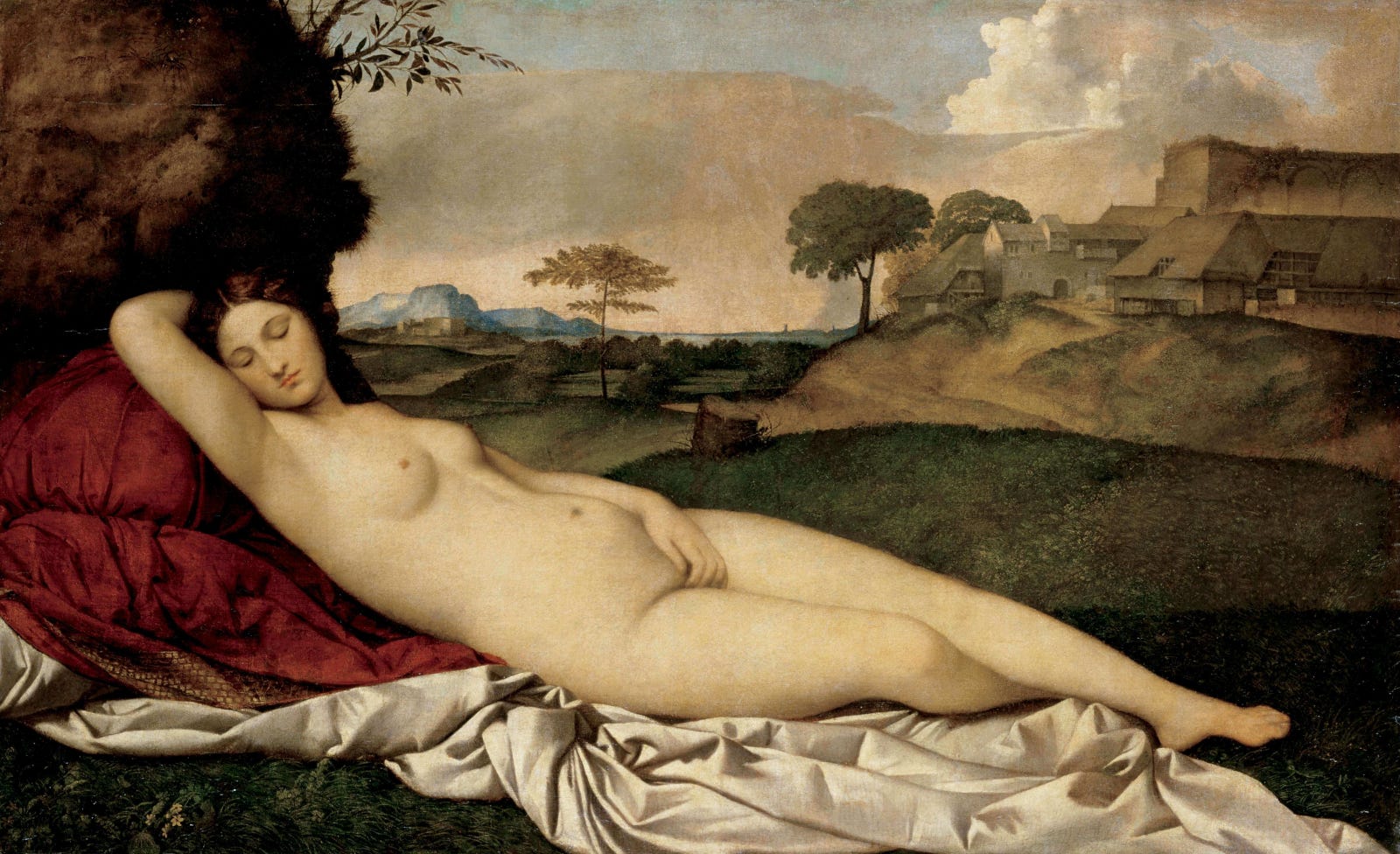
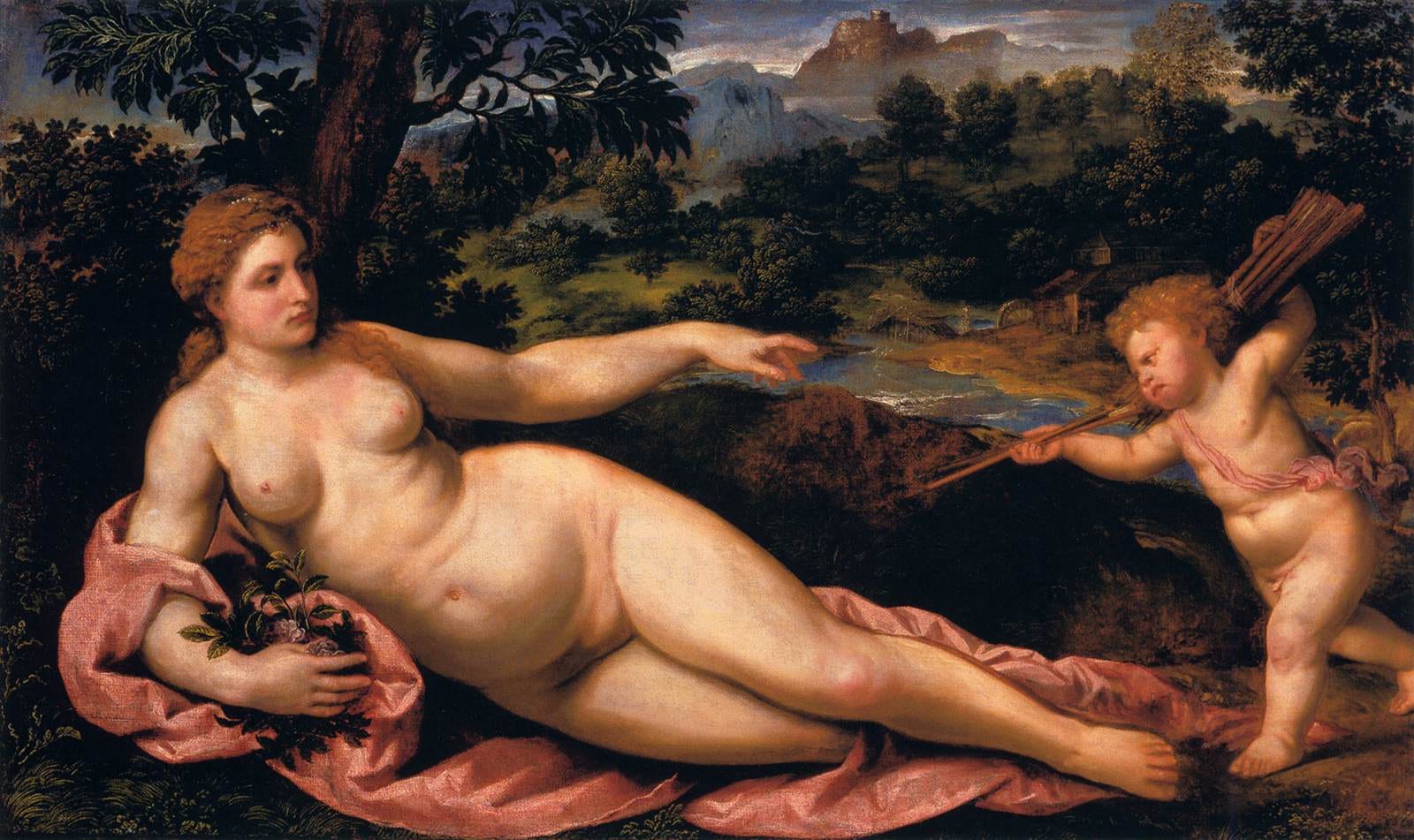
1545–1550: Painters like Paris Bordone (an Italian, despite the French given name) continue the tradition. This canvas is at the Muzeum Narodowe, Warsaw.
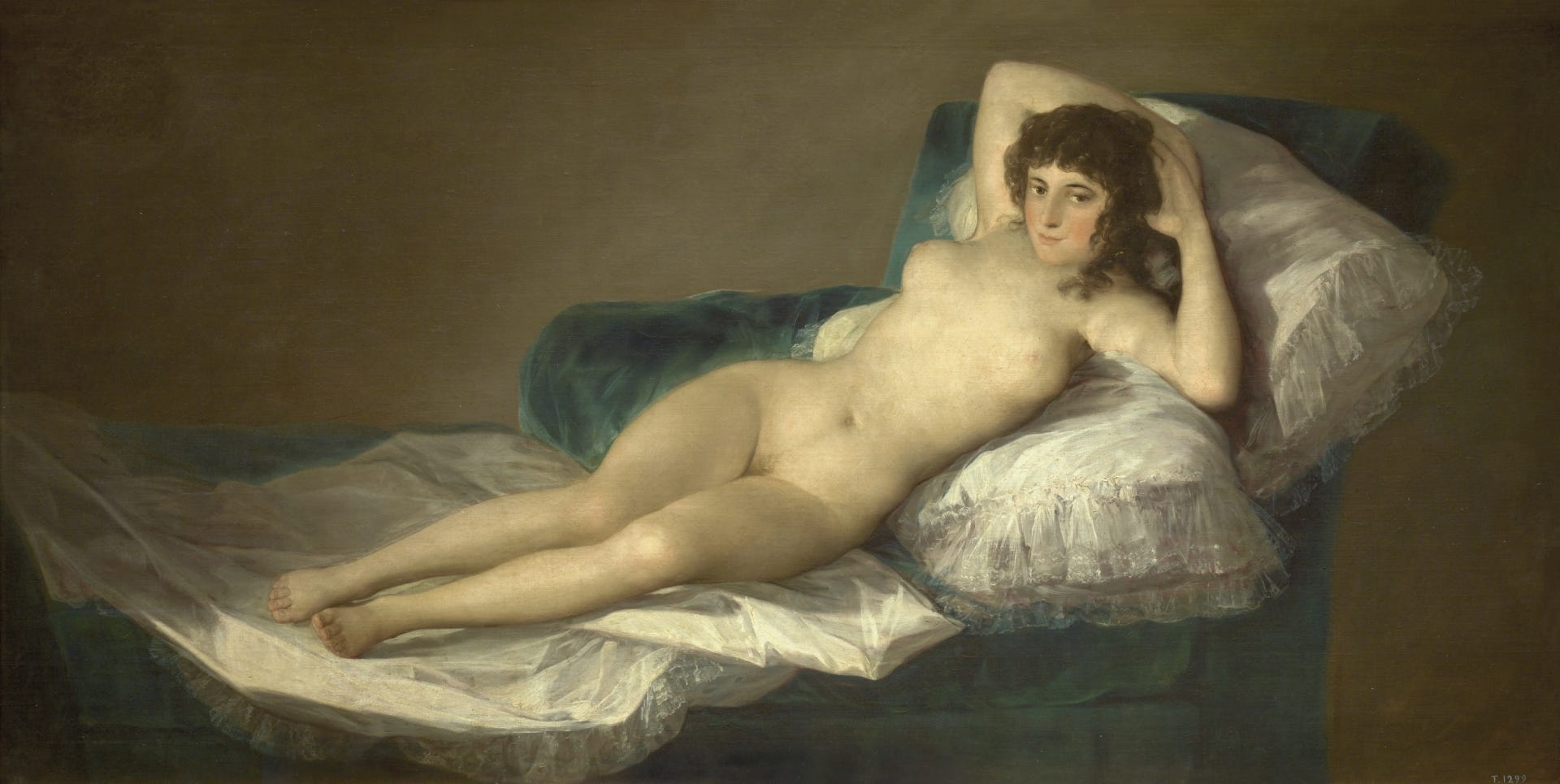
1797–1800: Francisco Goya finishes his Venus, called The Naked Maja, commissioned by the prime minister of Spain for a private residence. A companion piece, also at the Museo del Prado, shows a clothed alternative to the pose. The two now hang side by side in Madrid.
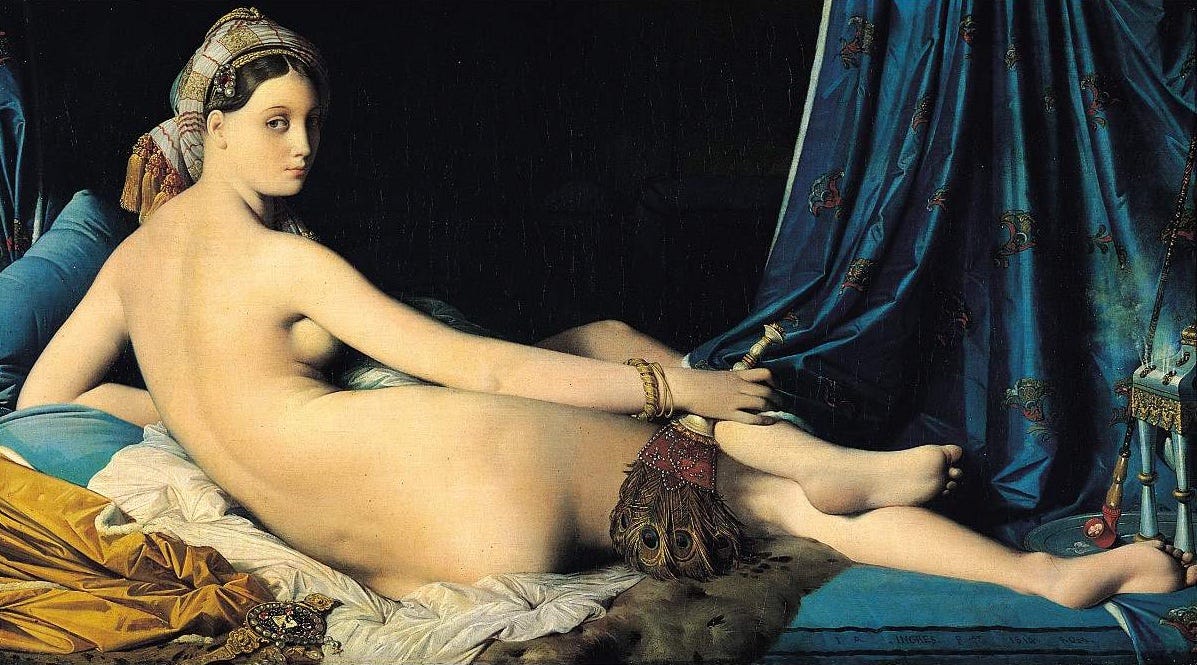
1814: Jean-Auguste-Dominique Ingres paints this reclining nude known by all artists of Matisse’s milieu (it’s at the Louvre). This is an odalisque, a genre now considered a leading example of a colonialist gaze. It shows an idealized concubine in a harem. Matisse took up the genre for a series of paintings in the 1920s.
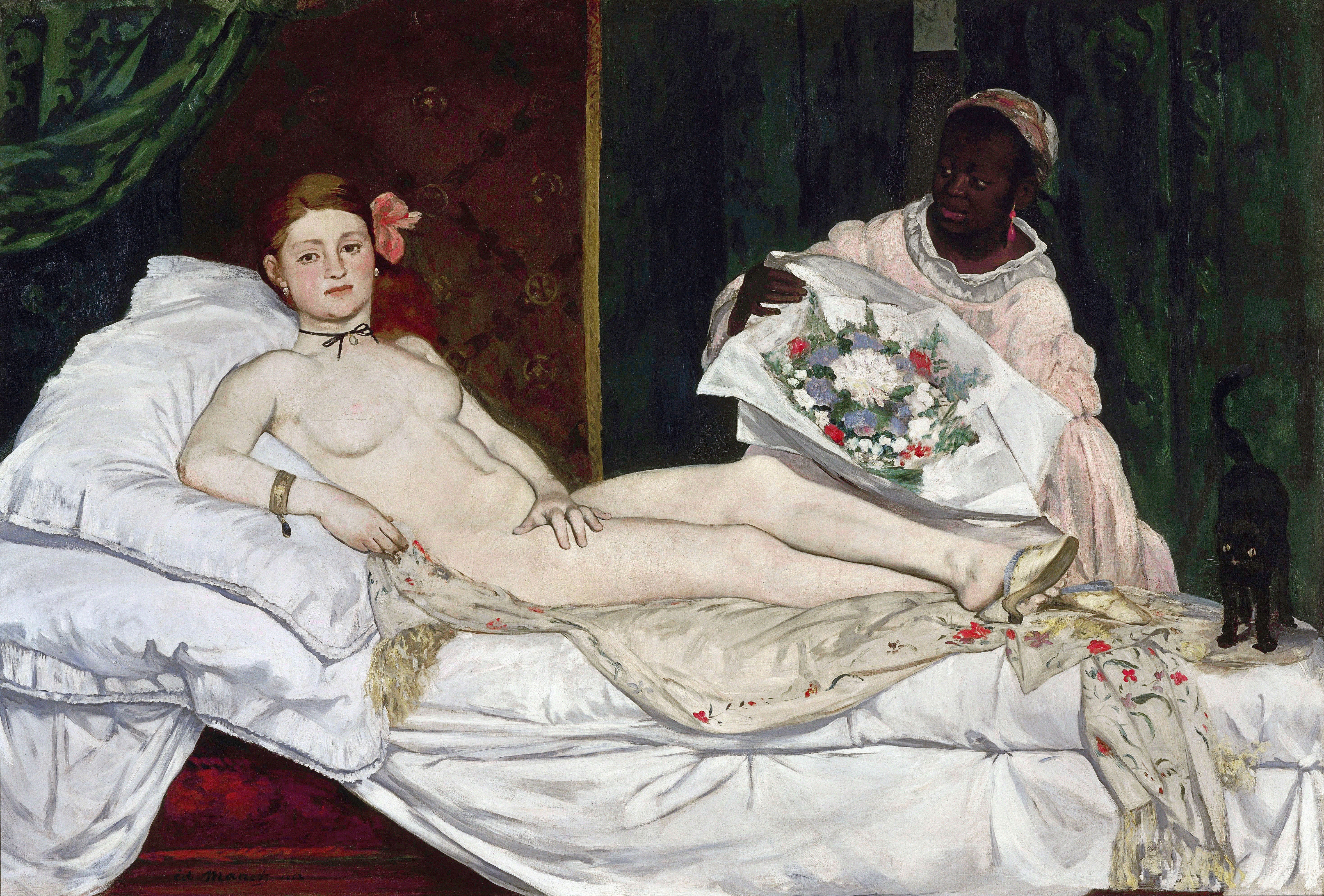
1863: Looking to Titian and Goya, Édouard Manet paints his favorite model, Victorine Meurent, in the Venus pose. Shown at the 1865 Salon, the hard-edged picture drew ire from critics and crowds.
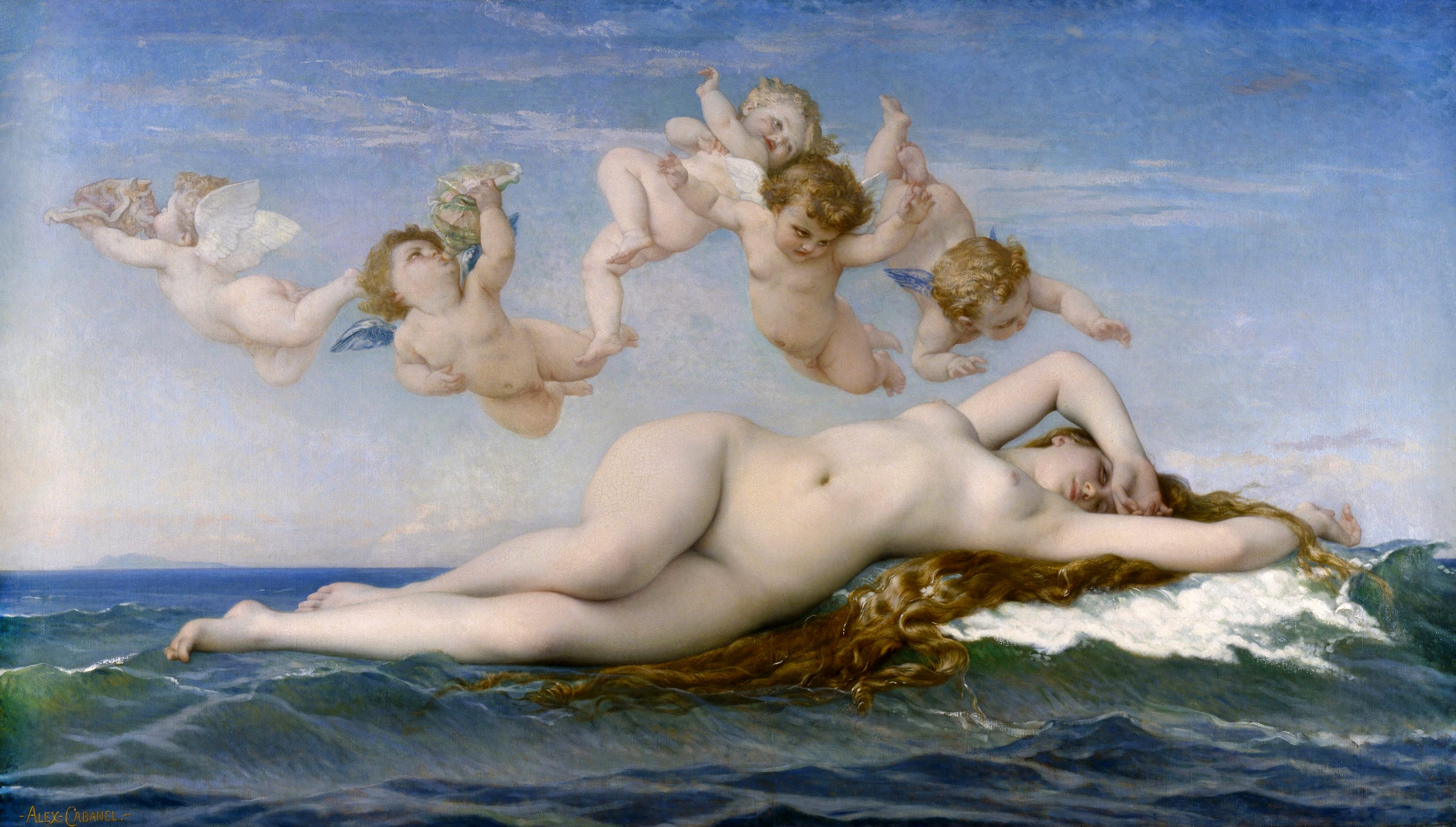
1863: Painted the same year as Manet’s provocation, Alexandre Cabanel pursues a classic Venus and wins rave reviews at the Salon. The painting sells to Emperor Napoleon III.
From Ancient Greece to Renaissance Venice
Now let’s look at the Greco-Roman tradition of the sleeping Ariadne. It’s perhaps this pose that seems most like the Matisse pose: the elbow up above the head, the other elbow down for support, and the leg crossed. Matisse’s main innovation would be waking Ariadne up.
The pose features Ariadne, the daughter of King Minos, in elegant repose. (Side note: Remember that Ariadne is a character’s name in Inception? Played by Elliot Page.)
First we see a Roman copy of a Greek Ariadne statue. (The Romans made a lot of copies of Greek originals.) Diego Velázquez, when working for King Philip IV of Spain, had a copy of the statue made for the Spanish court, which we can assume Goya would have later seen.
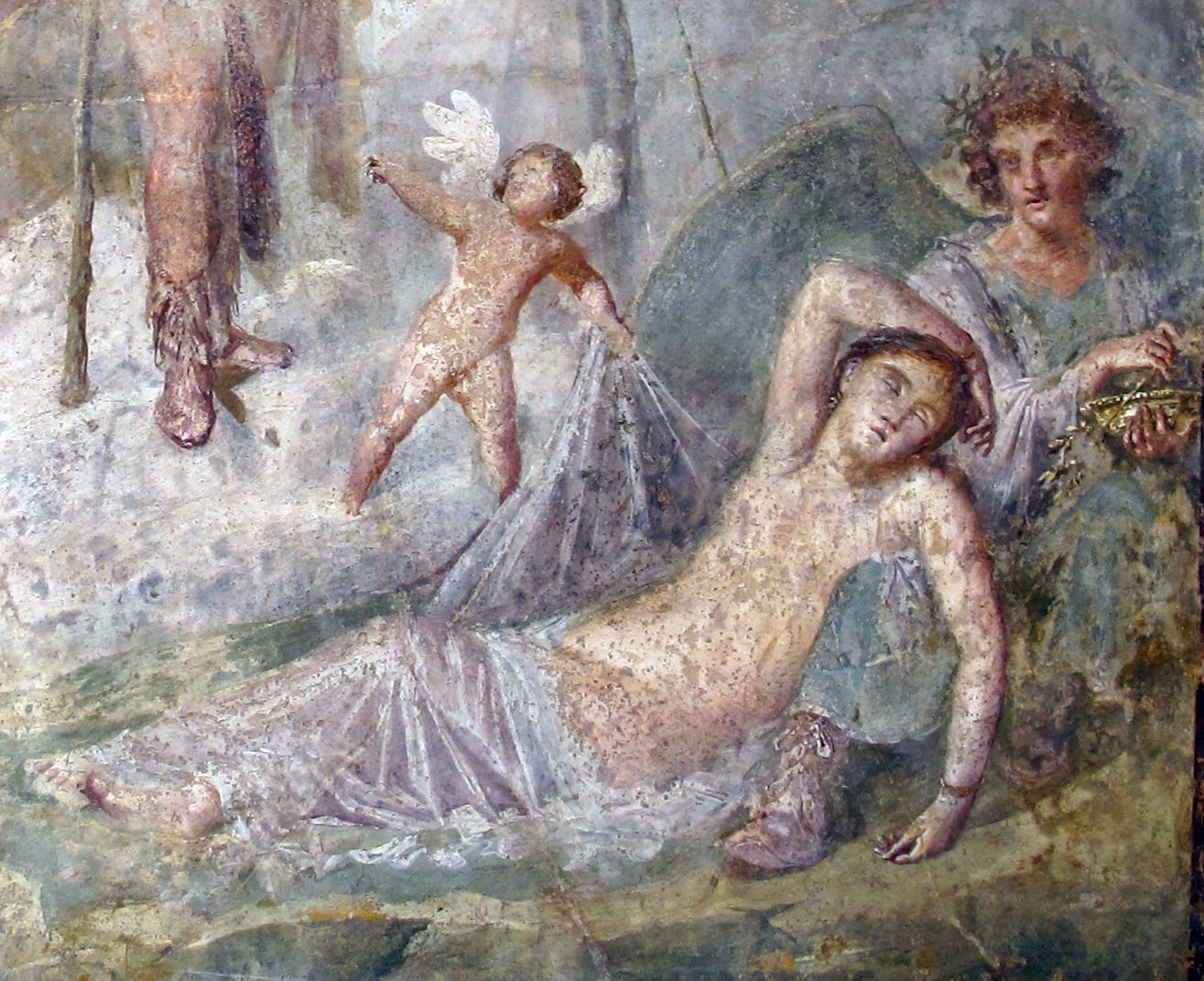
Then we see a fresco painting from Pompeii in the first century. The full image shows Dionysus/Bacchus arriving to find Ariadne asleep.
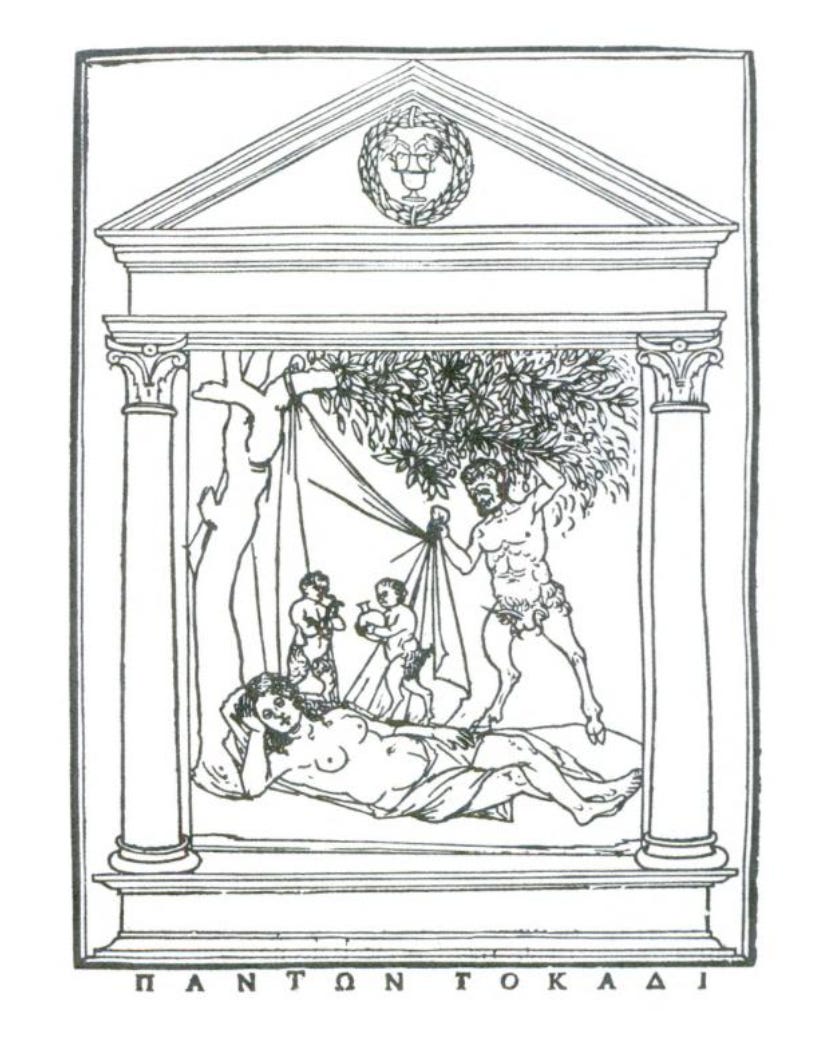
Here’s where this pose fits into the iconography pipeline: Giorgione and others are said to have drawn inspiration from a nymph figure in Francesco Colonna’s Hypnerotomachia Poliphili, an illustrated text from 1499. The nymph was inspired by the Ariadne tradition.
Matisse’s Turn
I visited the University of Pennsylvania’s Fisher Fine Arts Library to comb through Matisse’s catalogues raisonné to survey the many times he worked with this pose. I found examples of him using the pose in bulging terracotta sculptures, brusque charcoal sketches, delicate graphite drawings, and grand oil paintings. (To see my previous writing on Matisse, in The Philadelphia Inquirer, go here.)
Pinning down the pose’s origin is tricky. It’s clearly a Modern artist’s twist on the reclining Venus pose, which had been an art historical staple from Titian to Manet, and Matisse may have looked directly to Jean-Auguste-Dominique Ingres (1814, 1839) and Alexandre Cabanel (1863 Salon version; 1875 version in the Met). Meanwhile, a clothed version of the pose can be found as far back as the second century CE, in the Sleeping Ariadne figure at the Vatican.
The critical difference is clear: Matisse’s figure has been filtered through African art, which he and the Fauves began to study by at least 1906, the same year we first see the pose in his work. Matisse bought his first African statue that year, and it was with clay that he shaped and reshaped these symbolic figures, producing four sculptures that laid the foundation for drawings and paintings for the rest of his life.
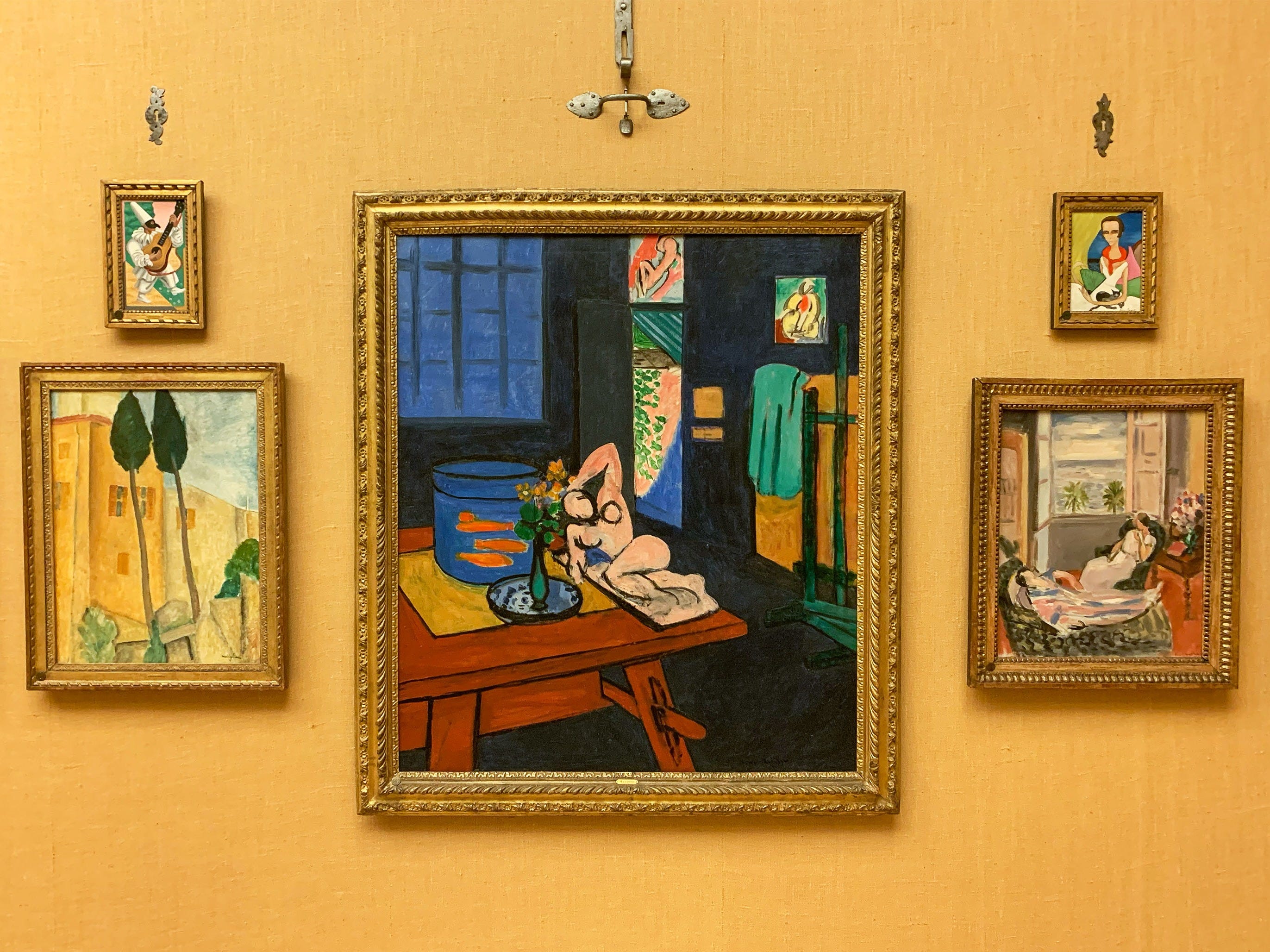
I stopped by the Barnes Foundation in Philadelphia to photograph Matisse’s Studio with Goldfish (L'Atelier aux poissons rouges), 1912.
African sculptures at the Barnes Foundation in Philadelphia, where many of Matisse’s paintings hang.
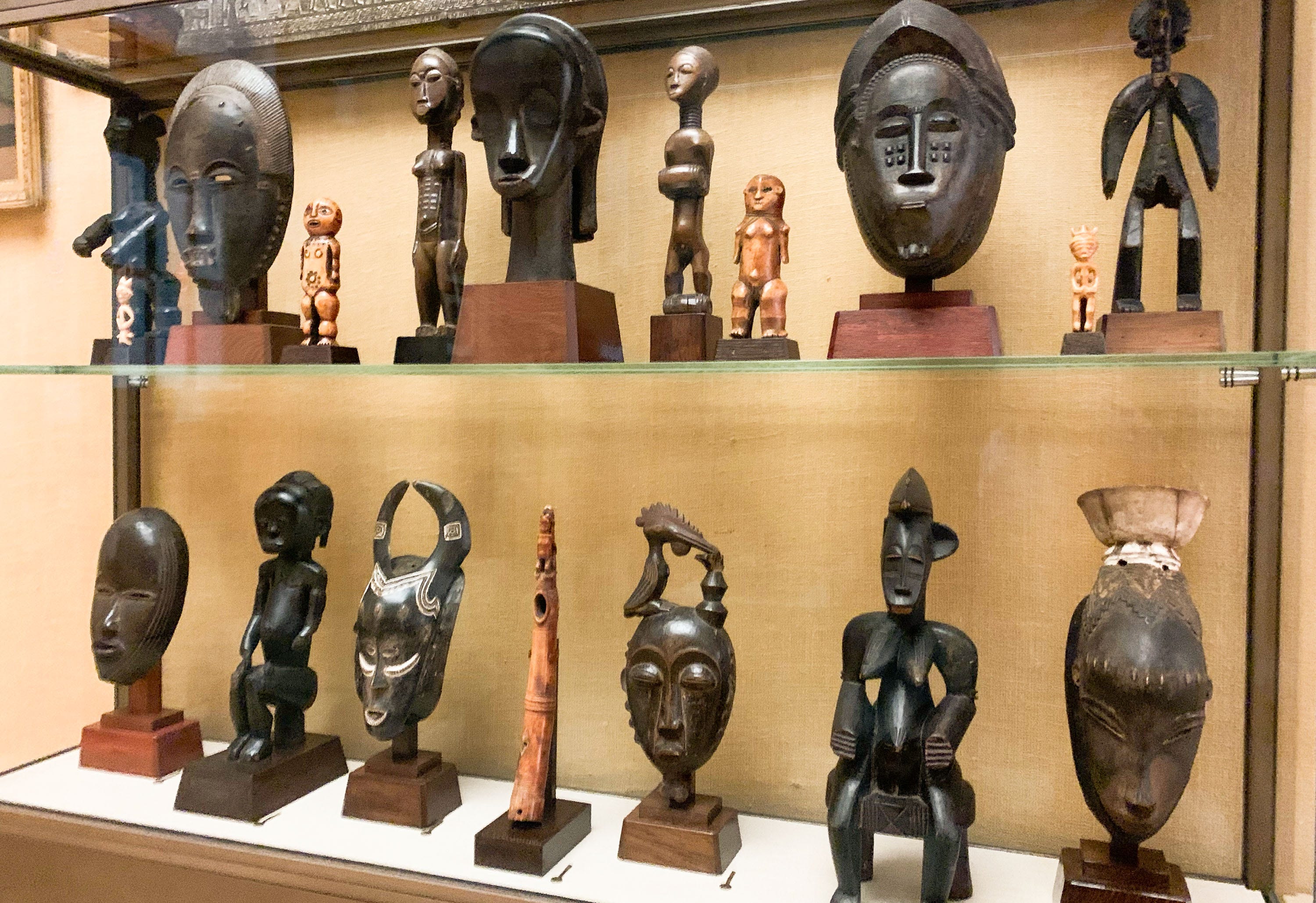
A sculpture purchased by Matisse for his personal collection. Made by the Vili people of the Congo sometime in the 19th or 20th century.
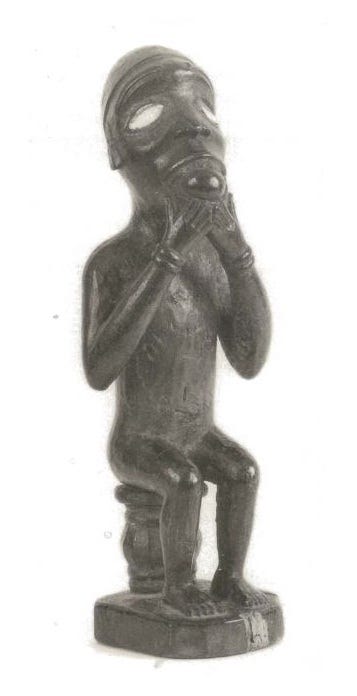
African sculpture showed Matisse a way to move beyond his academic training of the 1890s—to let go of the strict anatomy one pursued in the studio with a live model. Figures could bulge and twist in ways that didn’t need to make physical sense. Matisse called this “the invented planes and proportions.”
Matisse scholar Jack Flam points out that Cézanne, the great manipulator of plane and proportion, also died in 1906, and that his legacy was surely hanging in the air. Likewise, Flam reminds us that Matisse was gleefully “anti-Salon” and aggressive in his violation of the art world’s expectations. We also know that Matisse worked from photographs from magazines during this period, such as L’humanité féminine and Mes modèles, to source poses.
From Matisse’s catalogue raisonné: At left, a notebook drawing of a statue in the pose; at right, a still life painting of the statue, or perhaps more accurately, a painting that features the statue.
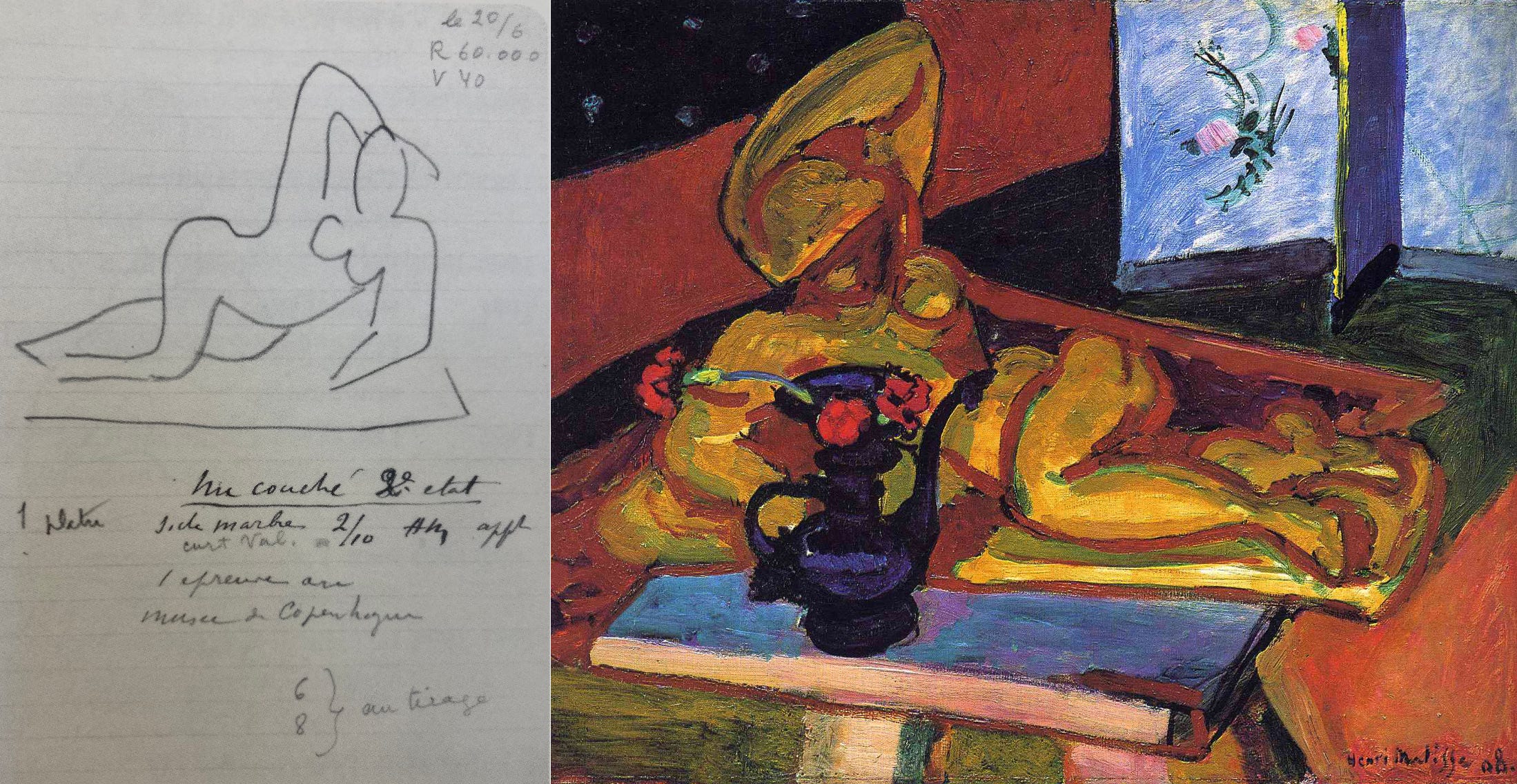
So it’s a complicated context, but whichever way you view it, African art was central to Matisse’s artistic epiphany. Nowadays this sampling of so-called “Primitive” art can seem more like theft than cultural exchange, but it’s also true that we should credit African art with unlocking many of the secrets of Modern art. Rather than being “Primitive” or undeveloped, this art saw past the limitations imposed by Renaissance perspective and academic anatomy, prizing expression and emotion over the cold calculations of mimesis.
Matisse, as both artist and art consumer, looked for formal elements and iconography beyond Europe. Here we can look to Jack Flam again, who wrote that African and Oceanic art “suggested new and original solutions to the formal and expressive problems with which he was preoccupied.”
(As for being a culture vulture, it’s worth noting that Matisse comes across as relatively empathetic in the 2018 Posing Modernity: The Black Model from Manet and Matisse to Today.)
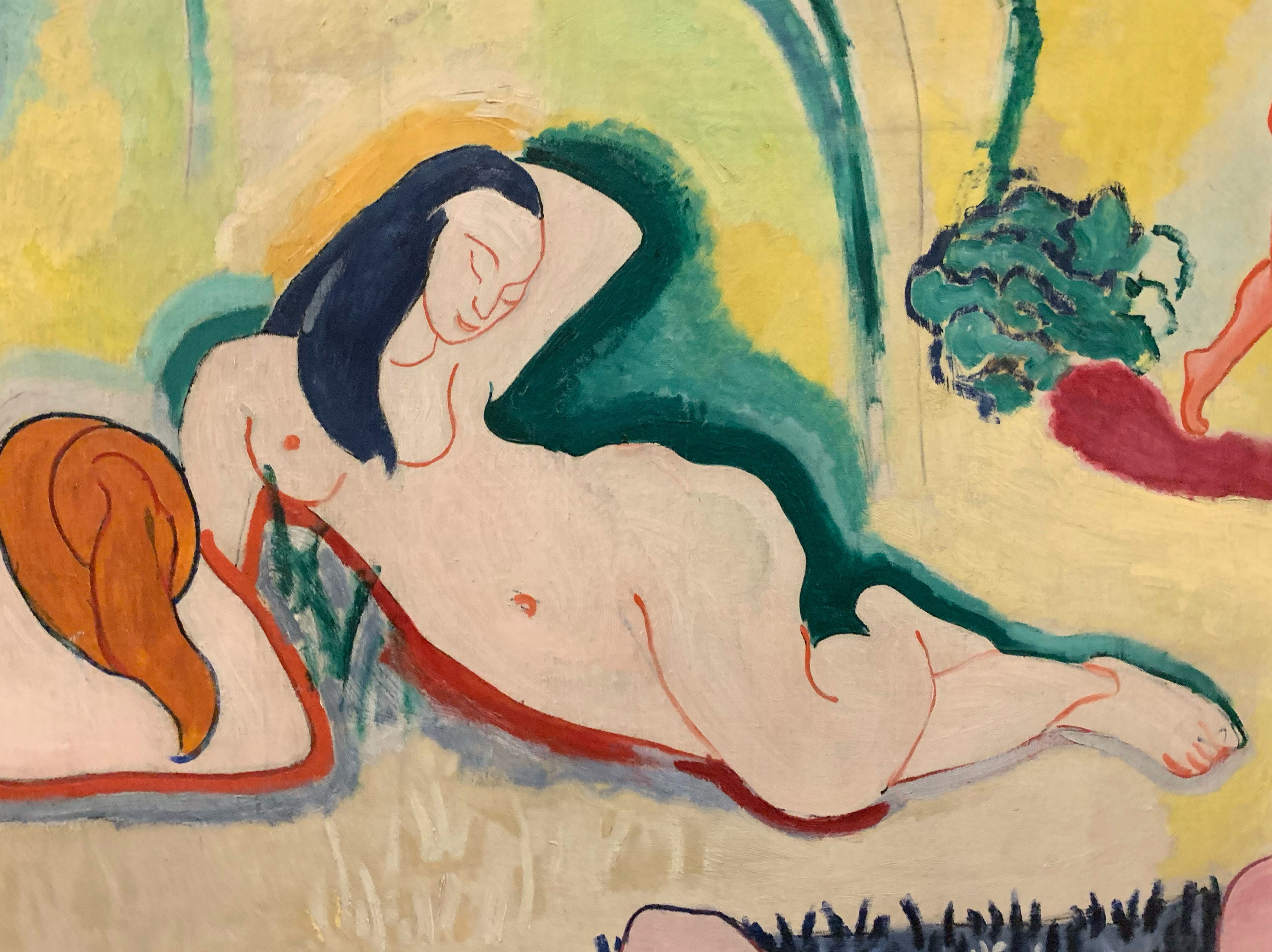
One thing is clear: once Matisse found the pose, he never let go. It has been described as his favorite “self-quotation.” It appears twice in his early magnum opus, Joy of Life (Bonheur de Vivre), finished in 1906: First by the brunette in the center right of the composition, who gazes down with closed eyes, and second by the salmon-skinned woman playing Greek wind instruments in the bottom of the composition.
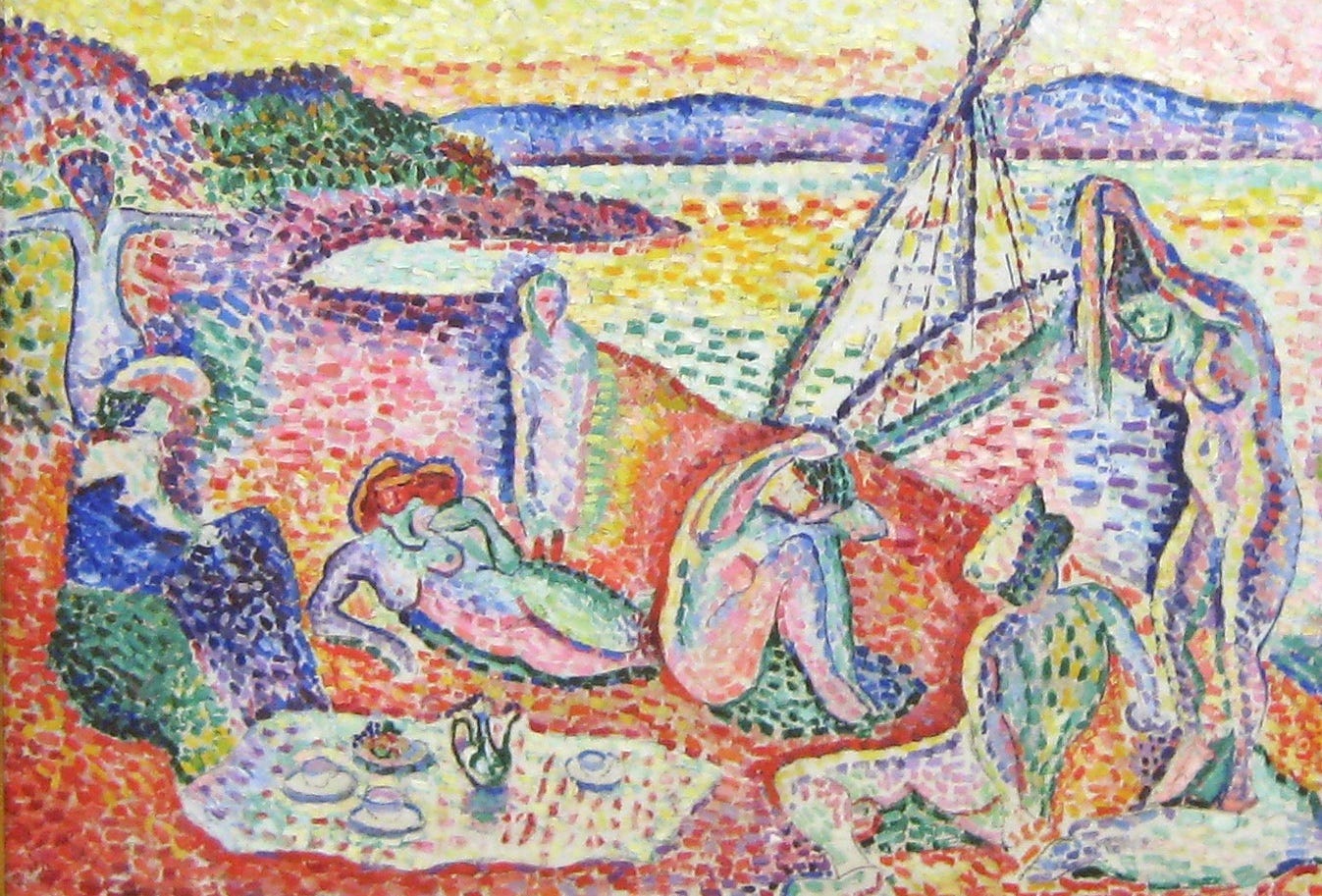
Matisse also included a reclining model in the 1904 Luxe, Calme, et Volupté, the Pointillist precursor to Joy of Life. But this figure neither strikes the full pose nor has the voluptuous shape. Thus the pose first appears in full in 1905–06, the major turning point of Matisse’s career.
A detail of the Pointillist-inspired Luxe, Calme, et Volupté, from 1904, before Matisse fell heavily under the influence of African art. Centre Pompidou collection (on deposit at the Musée d’Orsay).
A detail of the Joy of Life (Bonheur de Vivre), 1905-06, at the Barnes Foundation in Philadelphia.
How Matisse Made It His Own
We can imagine the many reasons the pose appealed to Matisse, a painter committed to undoing the age-old rules of oil painting. The nude female figure was the apotheosis of academic painting, and this pose allowed him to reshape and reinvigorate it. He could bend the model’s arms into pointed angles (sharp) while curving her legs (smooth), spinning the two halves of her body in separate directions. These contradictions create an overall sense of horizontal contrapposto: the figure is grounded and stationary, but she buzzes with energy.
To see how this works, let’s look at the three features that distinguish the Matisse pose from similar reclining nudes.
First, the top leg does not simply lie on top of the bottom leg: the top knee goes over and passes the bottom knee. That’s where the stretch comes in. Matisse, in his teaching days, referred to this as the “strain” of the pose. He told students to mirror the pose of the model to feel this location for themselves.
The second distinguishing feature of the pose is the palpable strength of the arms. The top bicep flexes as the elbow points upward, the hand gripping the back of the head. The bottom arm, meanwhile, props up the body—leaving a triangle of negative space between the torso, the arm, and the ground. Here again, the pose has a tension point. That makes the pose not only difficult to hold, but logically impossible.
A still life oil painting featuring Matisse’s statue in the pose, from 1917.
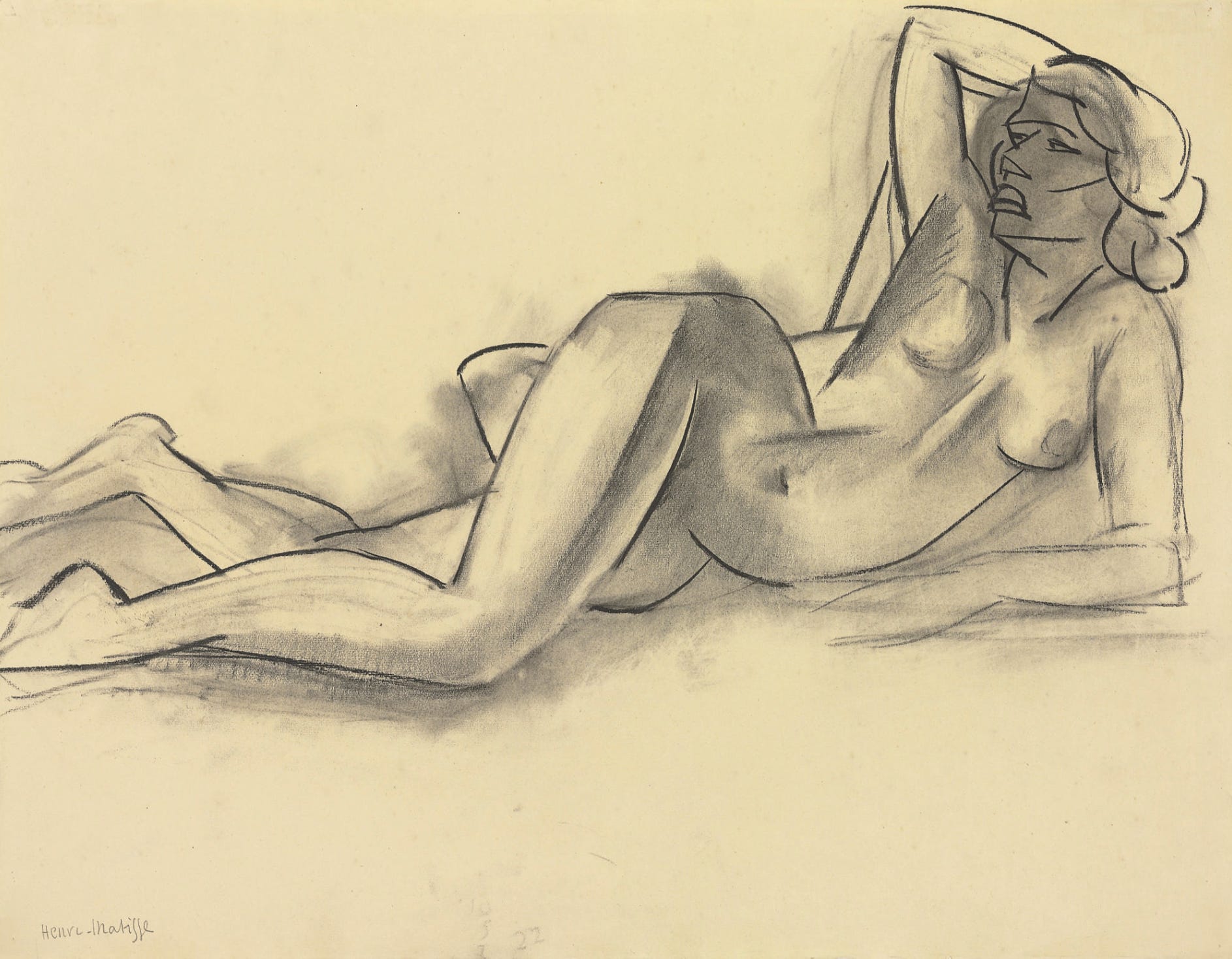
A more angular charcoal version of the pose, 1920. (Listed as 1929 some places, but clarified as 1920 in Parnassus, Nov., 1931, Vol. 3, No. 7).
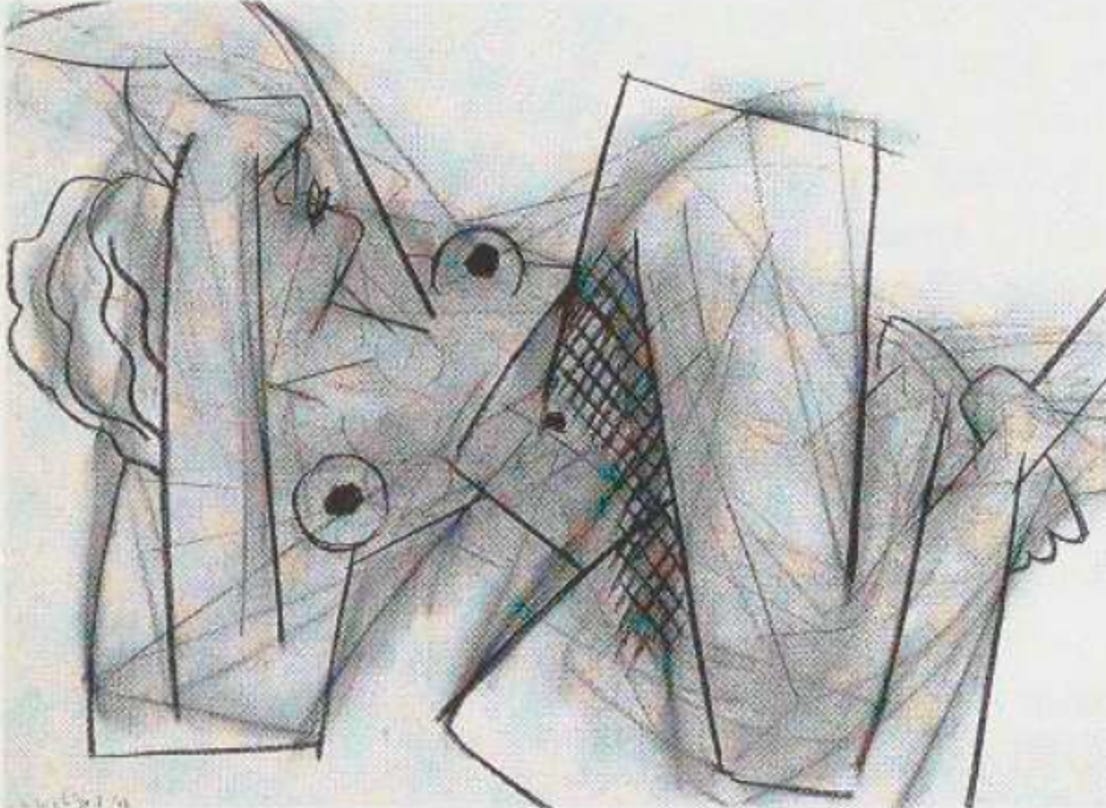
A charcoal study abstracting the pose, 1938.
A collection of drawings from Matisse’s catalogue raisonné.


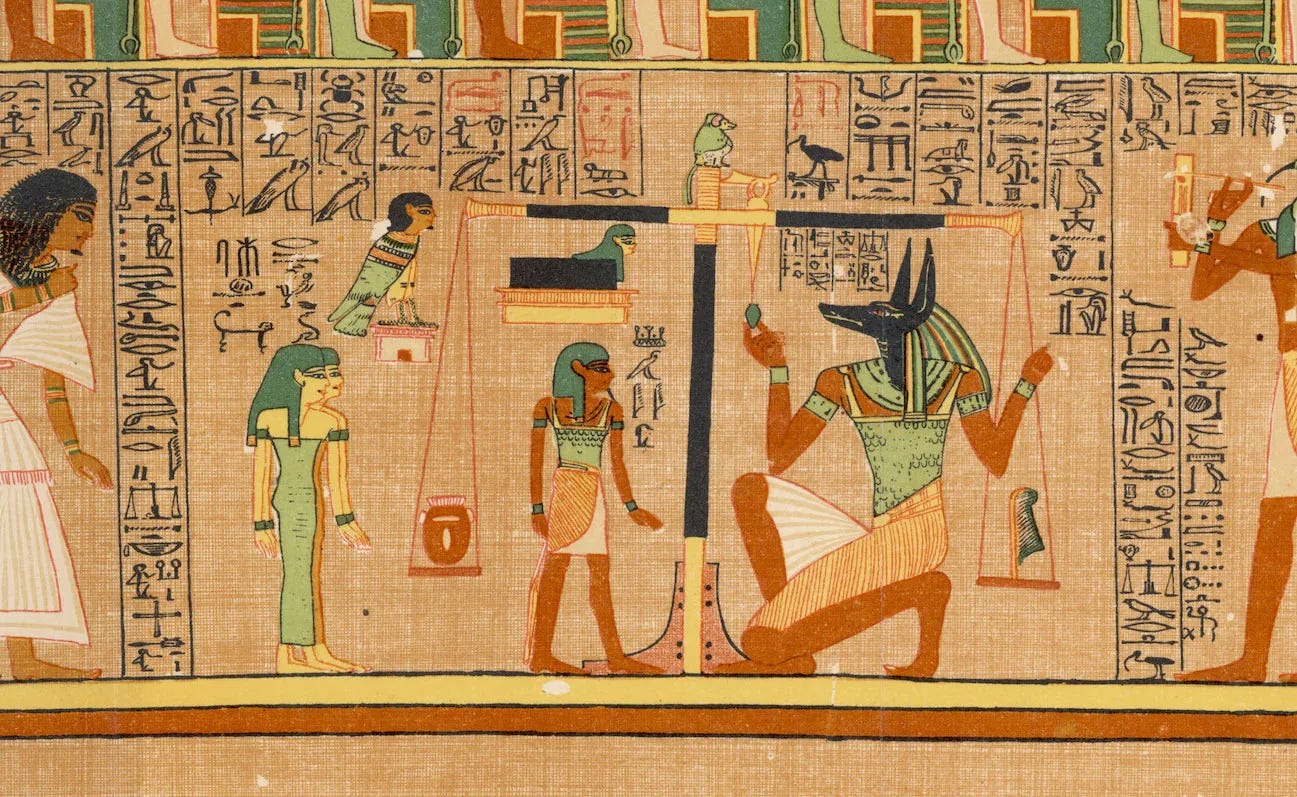
And along those same lines, the final mark of the Matisse pose is an ancient trick: he shows us the chest from a frontal view, even though the legs are seen from a side view. This was the anatomical hallmark of Egyptian painting—a deliberate departure from objective vision in order to emphasize what the eye focuses on. In other words, to show the best of both worlds. It’s not sleight of hand, because it’s so obviously un-real, but it still registers as true because we conceptually understand the figure to be whole and human.
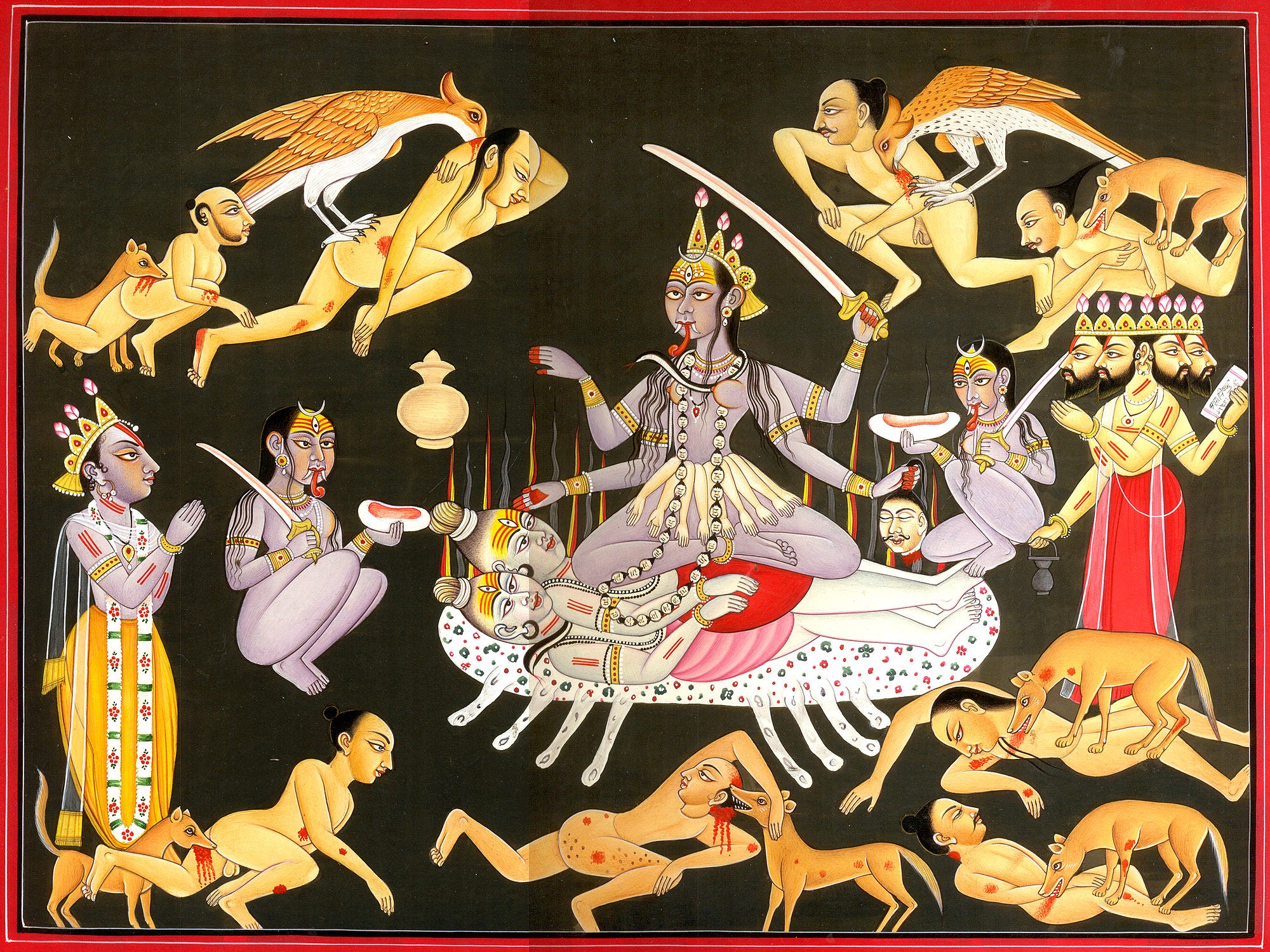
Elsewhere, the pose can be found in early modern Indian painting, such as in a 1710 painting of the goddess Kali at the Victoria and Albert Museum. The opaque watercolor scene shows Kali, known as the Great Goddess, conquering fellow deity Shiva. Eight nude figures are attacked by jackals and vultures, and four of these dying figures “recline” in Matisse’s favorite pose.
A detail of an Egyptian Book of the Dead: Anubis, c. 1275 BCE.
Kali, 1710, Unknown artist, Victoria and Albert Museum.
Similar Poses in Modern & Contemporary Art
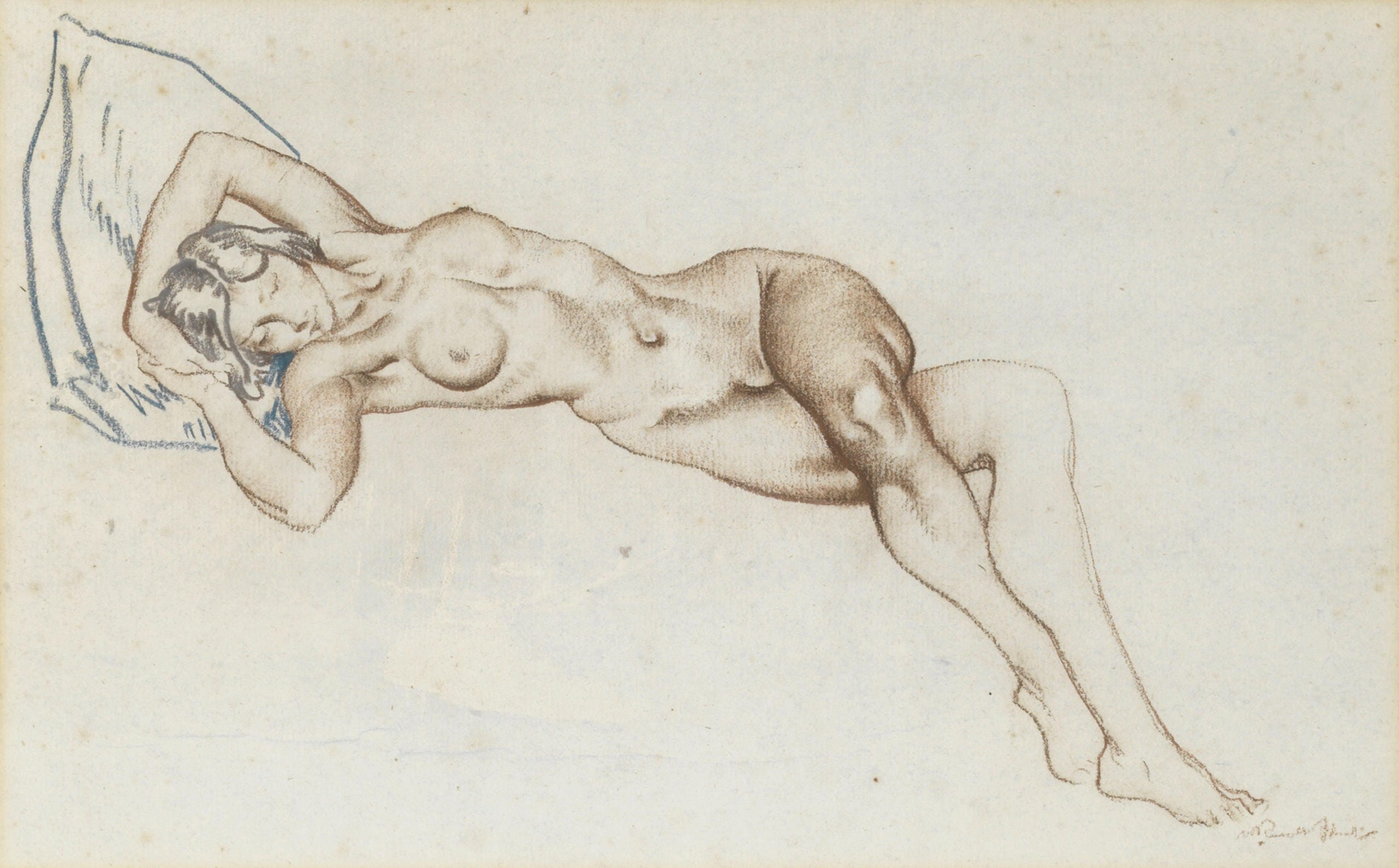
Matisse wasn’t the only Modern artist who fell in love with the weird pose. The Scottish artist William Russell Flint (1880–1969) worked with a similar pose in a series of undated drawings.
By comparing the two artists, we quickly see that the way Flint drew women—voluptuous and drifting, resulting in a pin-up quality—seems more lascivious than Matisse, who by comparison appears committed to a distortion or contortion of the figure, rather than an erotic display.
It’s here that the bottom arm becomes decisive: Matisse’s figures hold themselves up, defying gravity at times, while Flint’s lie flat and drift off. Like so many female nudes drawn and painted by men, it’s not clear whether these figures dream their own dreams or exist in the dreams of men.
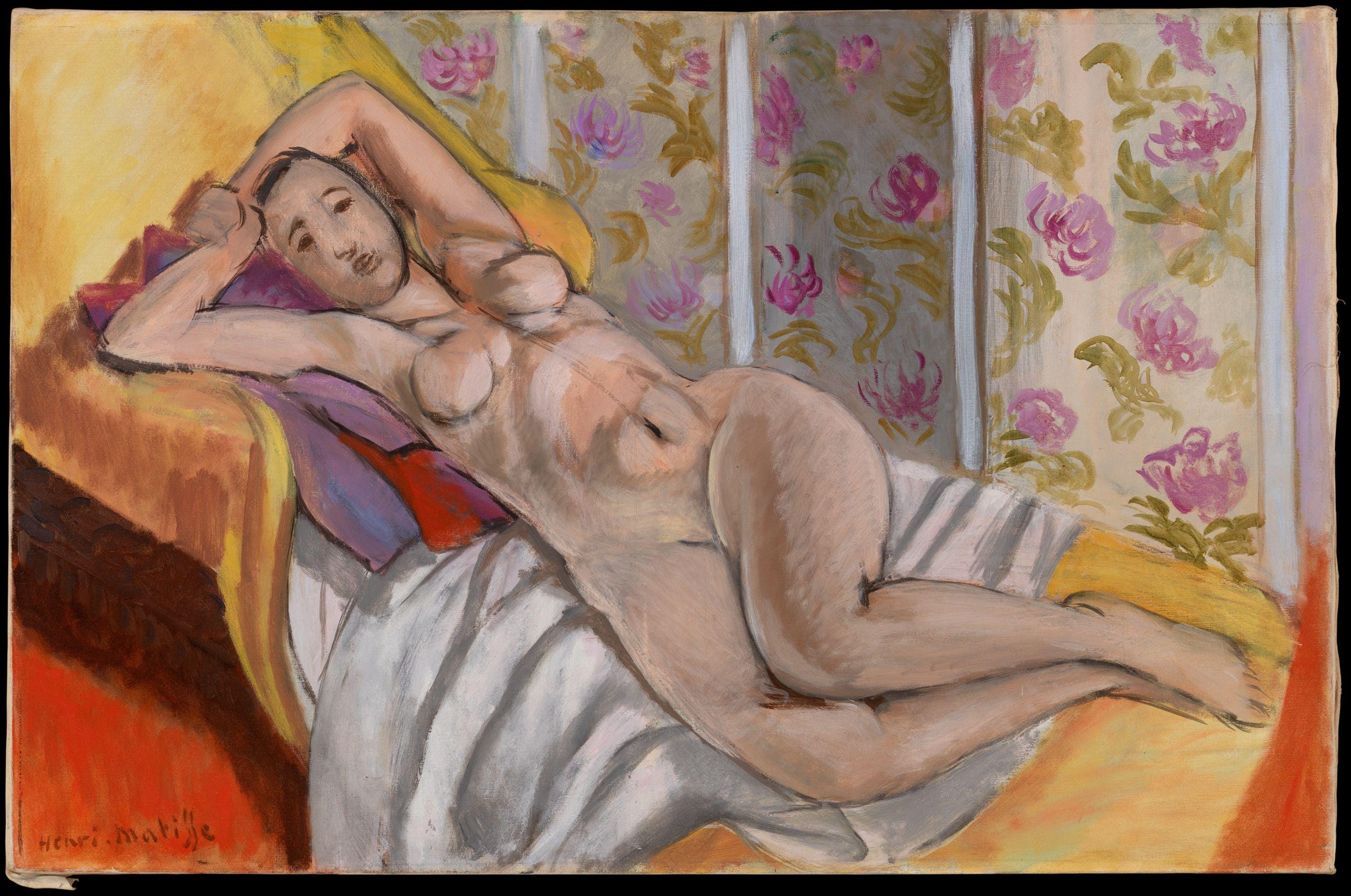
The supporting strength of the bottom shoulder can be subtle, as in this painting at the Barnes Foundation in Philadelphia: Reclining Nude (Nu couché), an oil painting from between 1923–24.
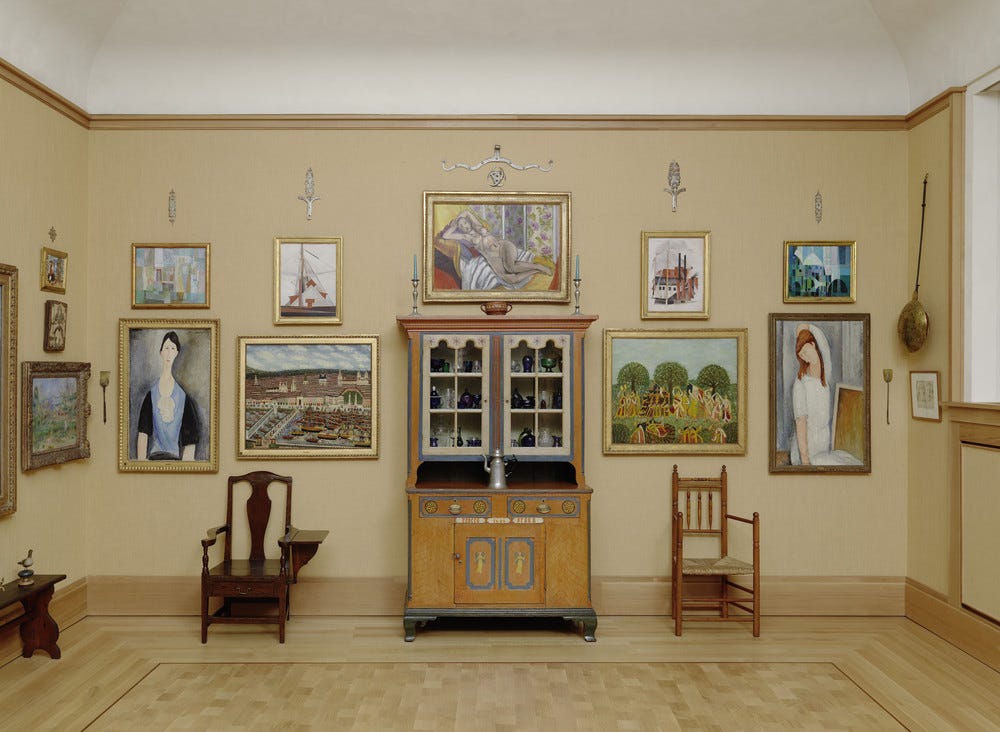
Reclining Nude (Nu couché), seen at the center, in its ensemble position at the Barnes Foundation in Philadelphia.
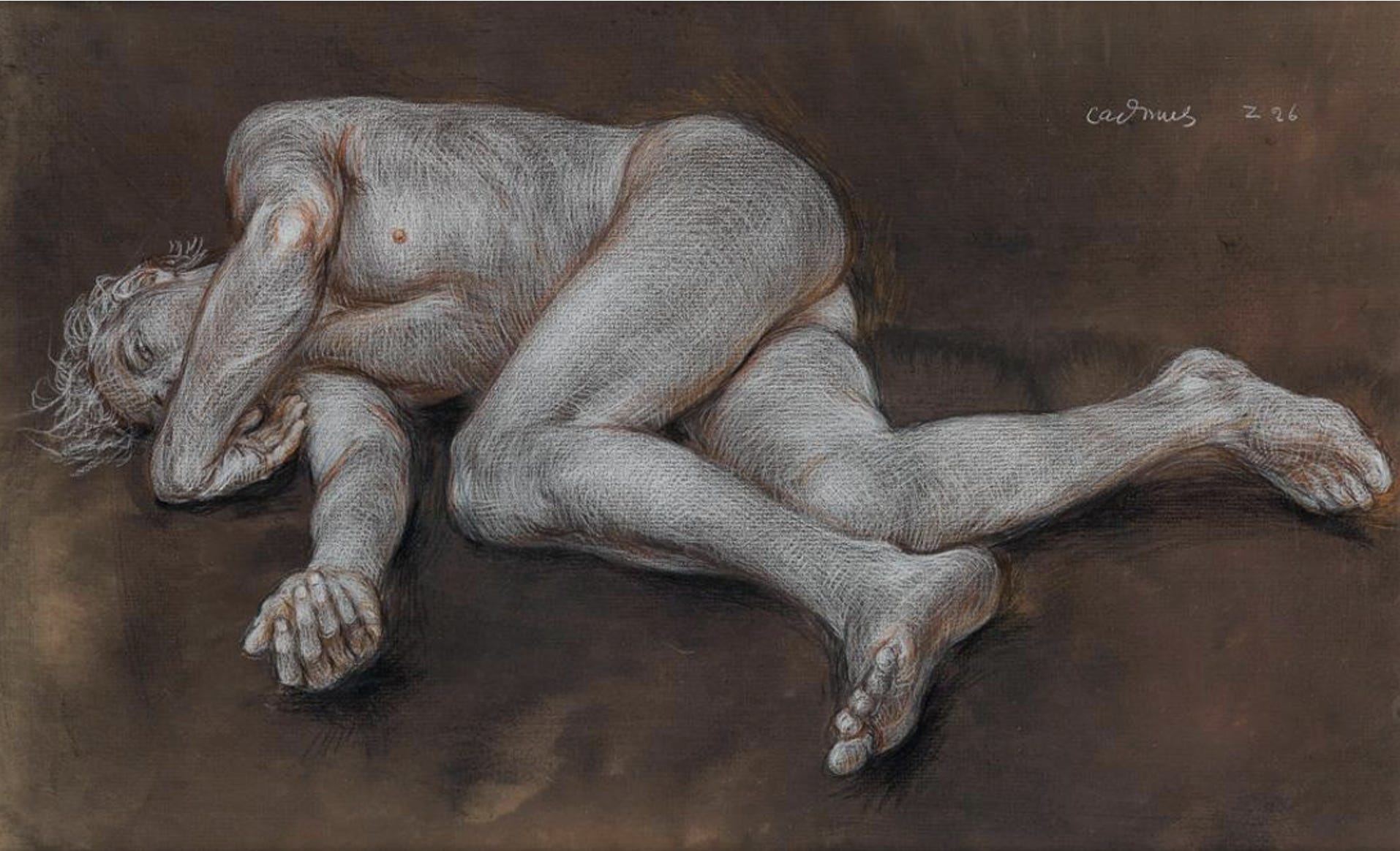
Variations of the pose can be found in more recent works, such as Paul Cadmus’s Reclining Male Nude from 1998. Illuminating his figure with curved hatches of white chalk, Cadmus shows a fit young man in the contorted pose, albeit with his elbow down to cover the face.
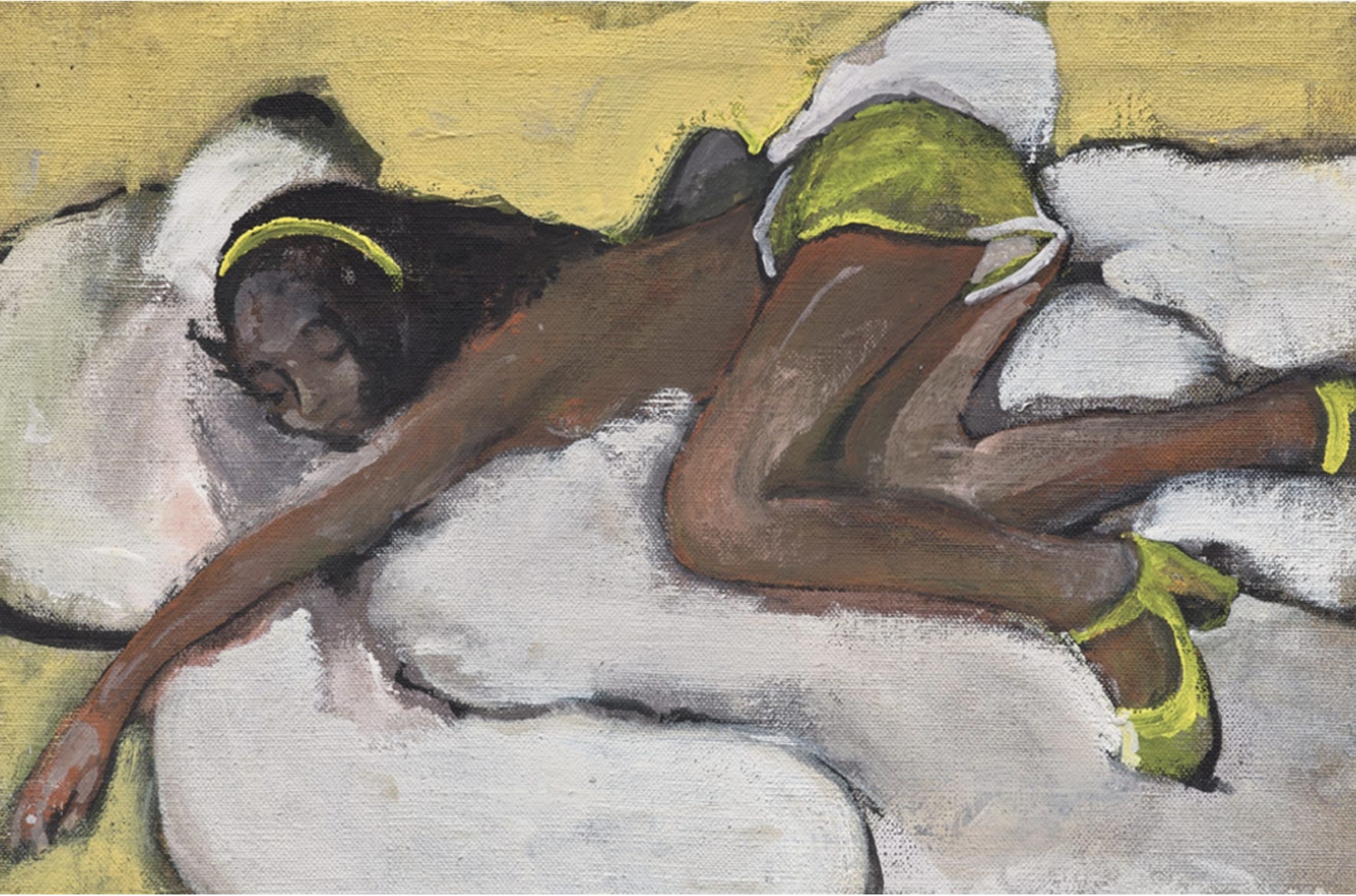
And in a reverse of Cadmus figure-ground color palette (not white on brown, but brown on white), Noah Davis painted a resting, half-nude figure with her top knee crossed over the bottom. The work, Untitled (2010), sold for nearly $1 million at auction in 2023.
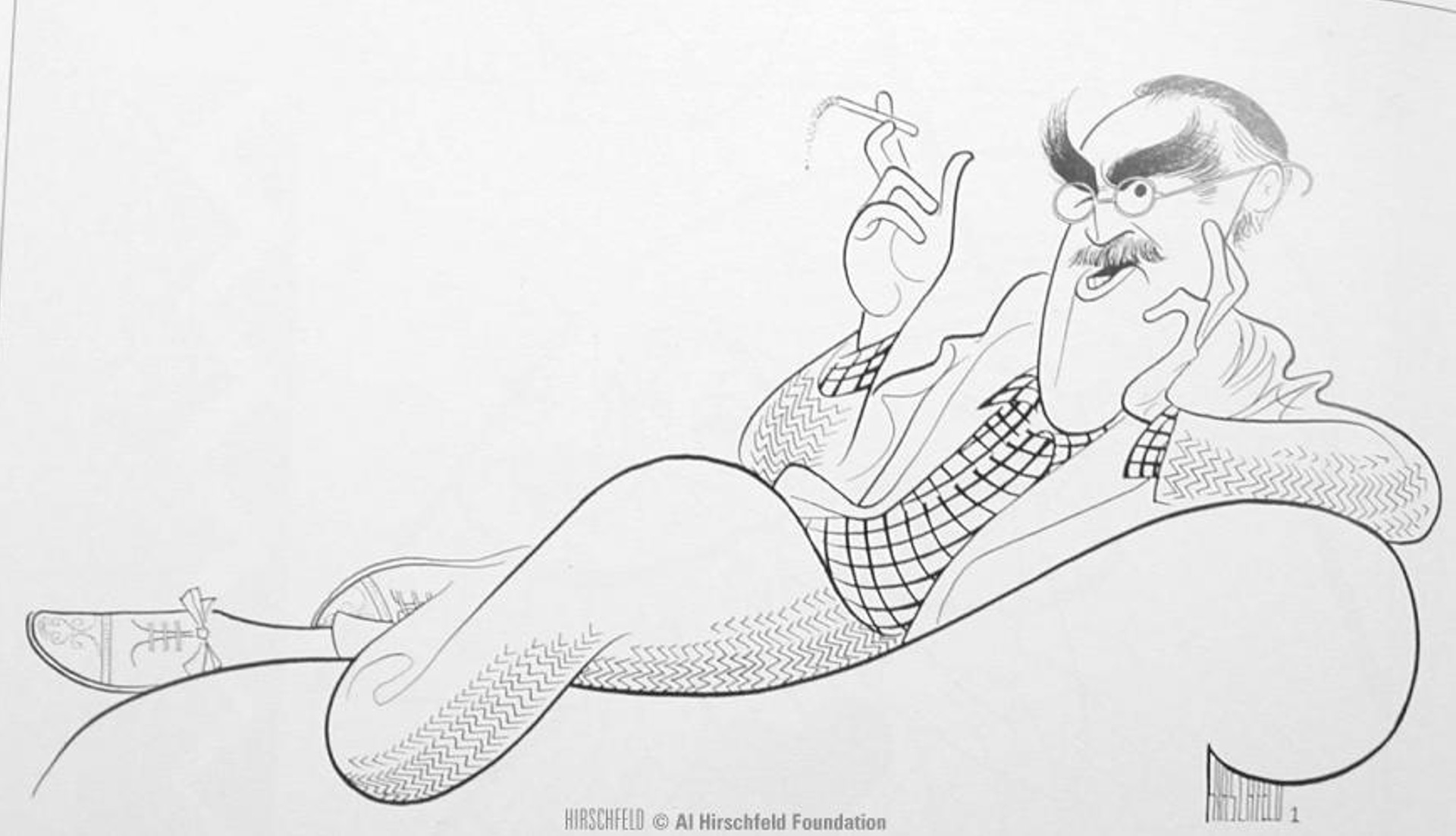
Then there’s a caricature by one of my favorite draftsmen, Al Hirschfeld. He plays with the pose in a drawing of the humorist S.J. Perelman, with whom he collaborated on a book.
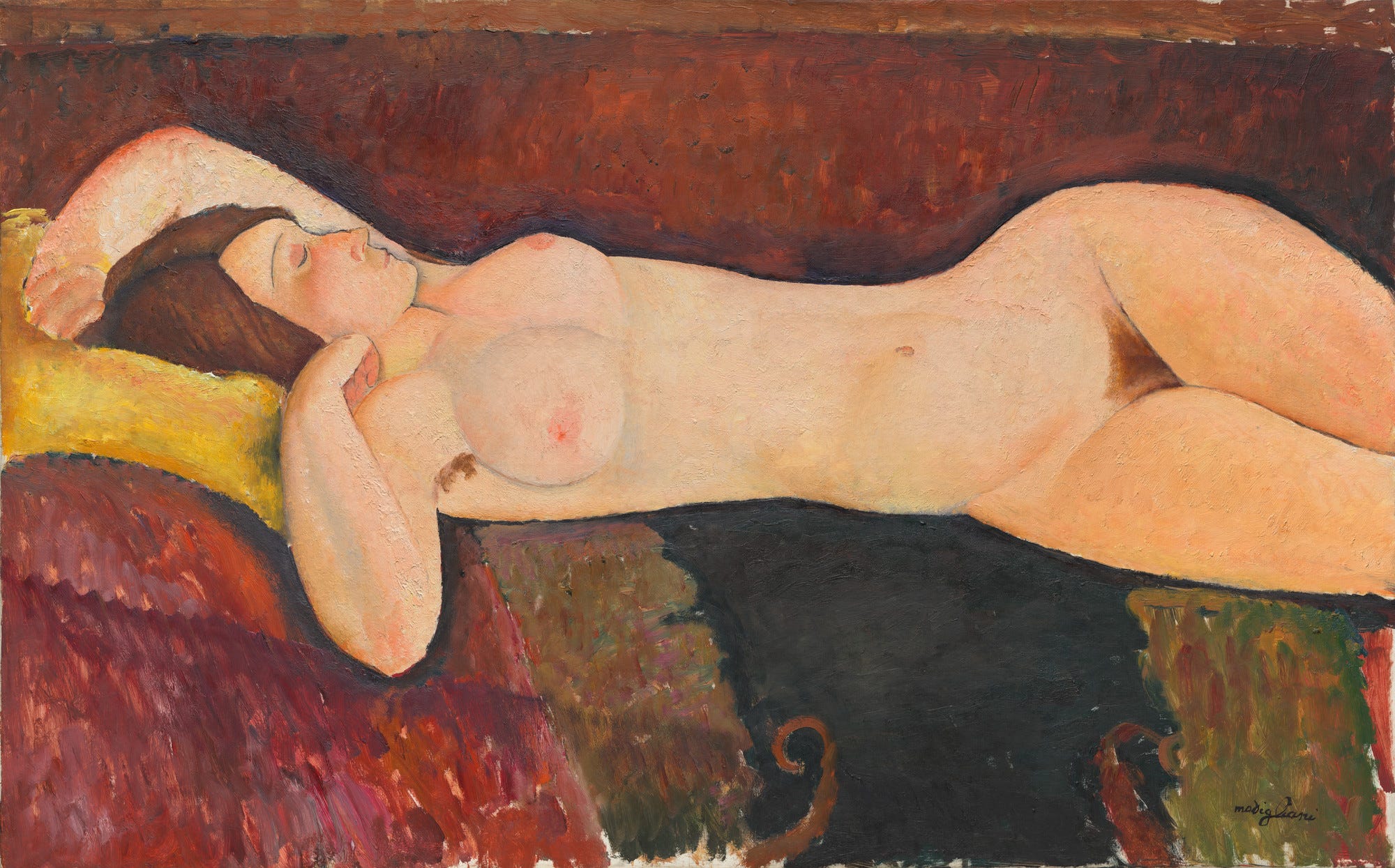
First up: MoMA holds this reclining nude by Amedeo Modigliani, dated 1919.
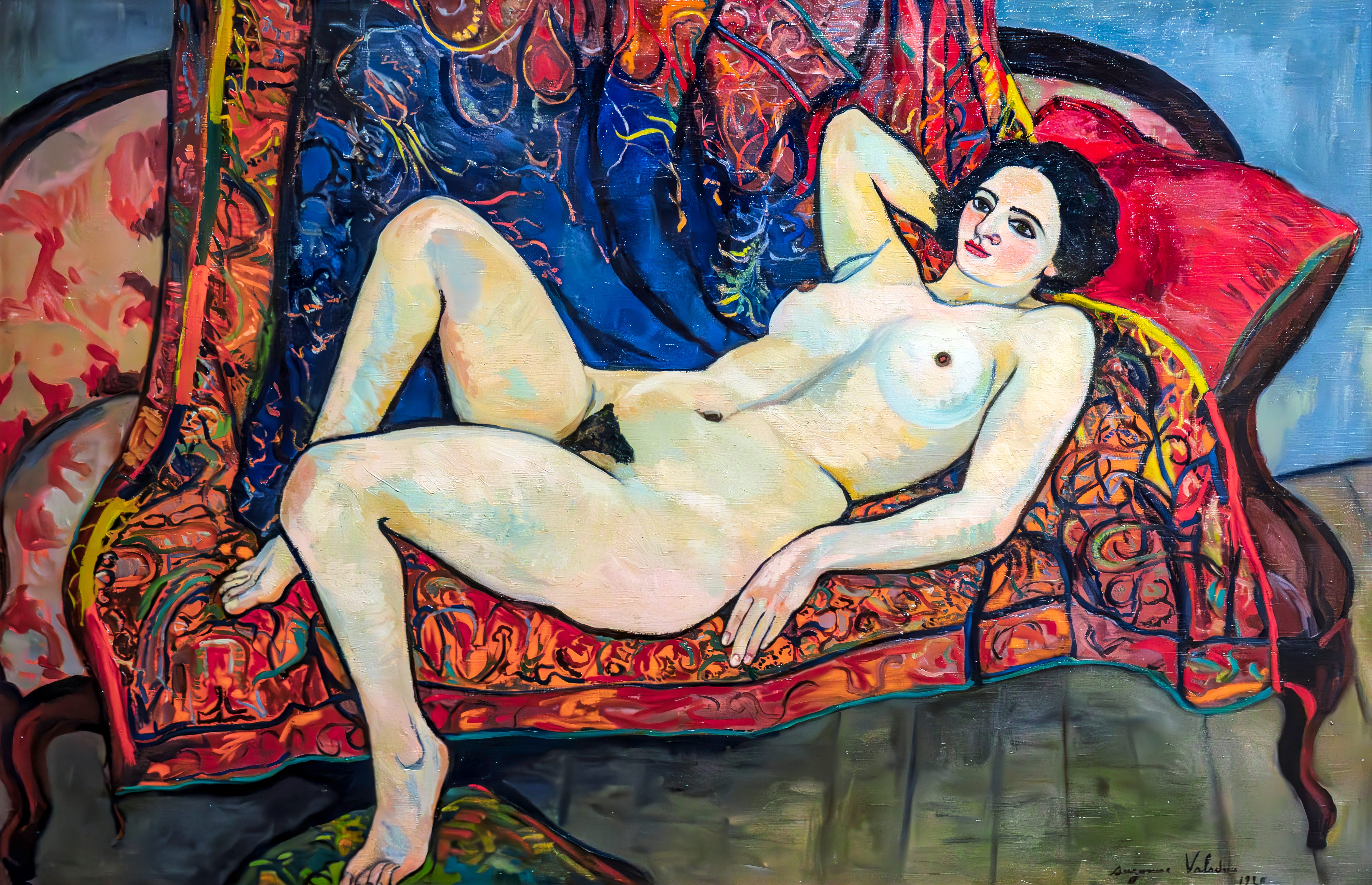
Suzanne Valadon, an artist model who became a contemporary to Matisse as a painter, completed this painting in 1920. It’s at the Musée du Petit Palais, Genève.
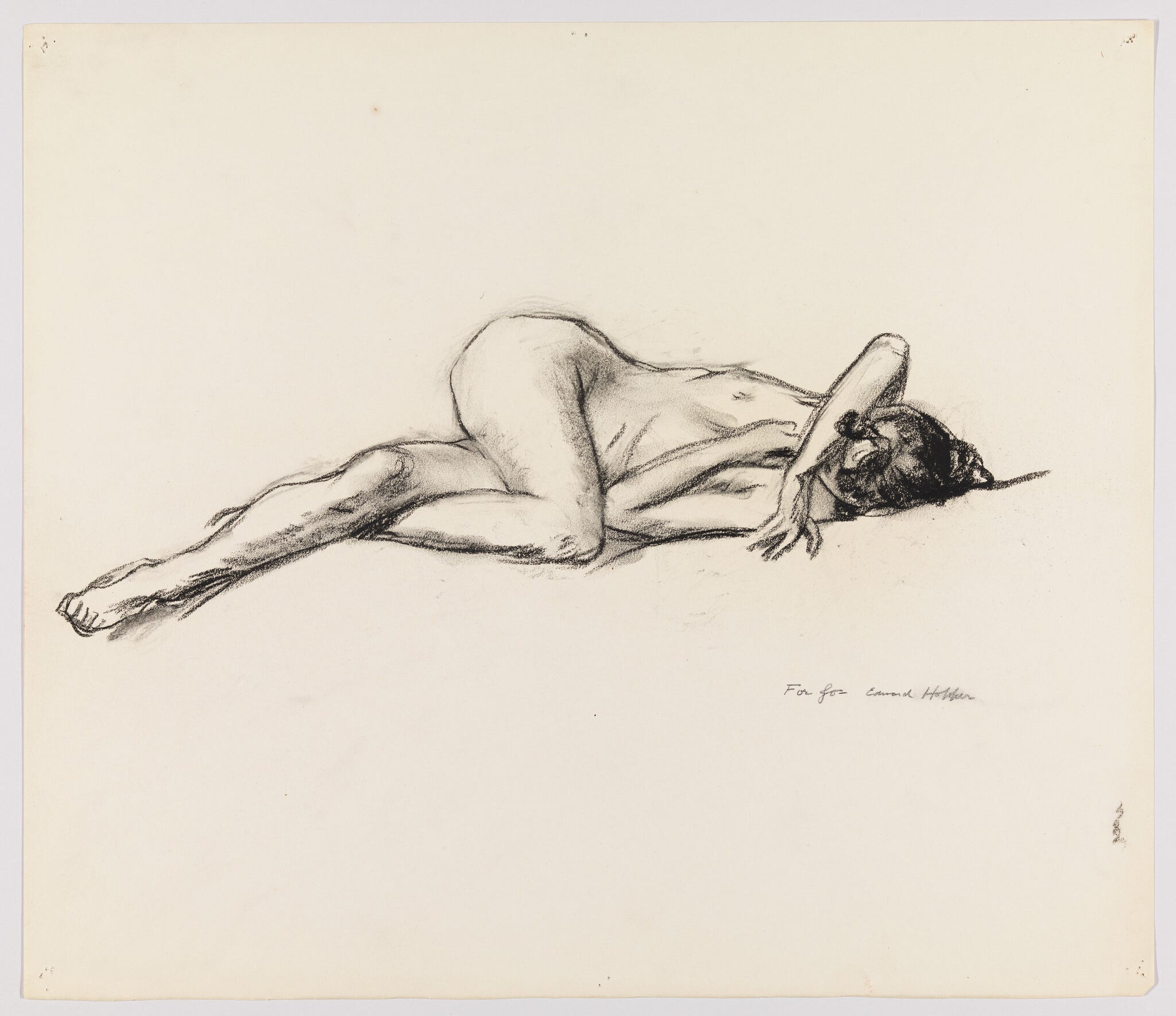
This sketch by Edward Hopper (1920–1925) is among the Whitney Museum’s 3,000+ works by, or about, the artist. Hopper drew other similar reclining nudes during the same years as Matisse’s early experiments.
If we are to believe this dating—and there is no reason not to besides astonishment—Paul Cadmus did this drawing at 94 years old. Reclining Male Nude (Z 26), after 1998, done in color crayons and charcoal.
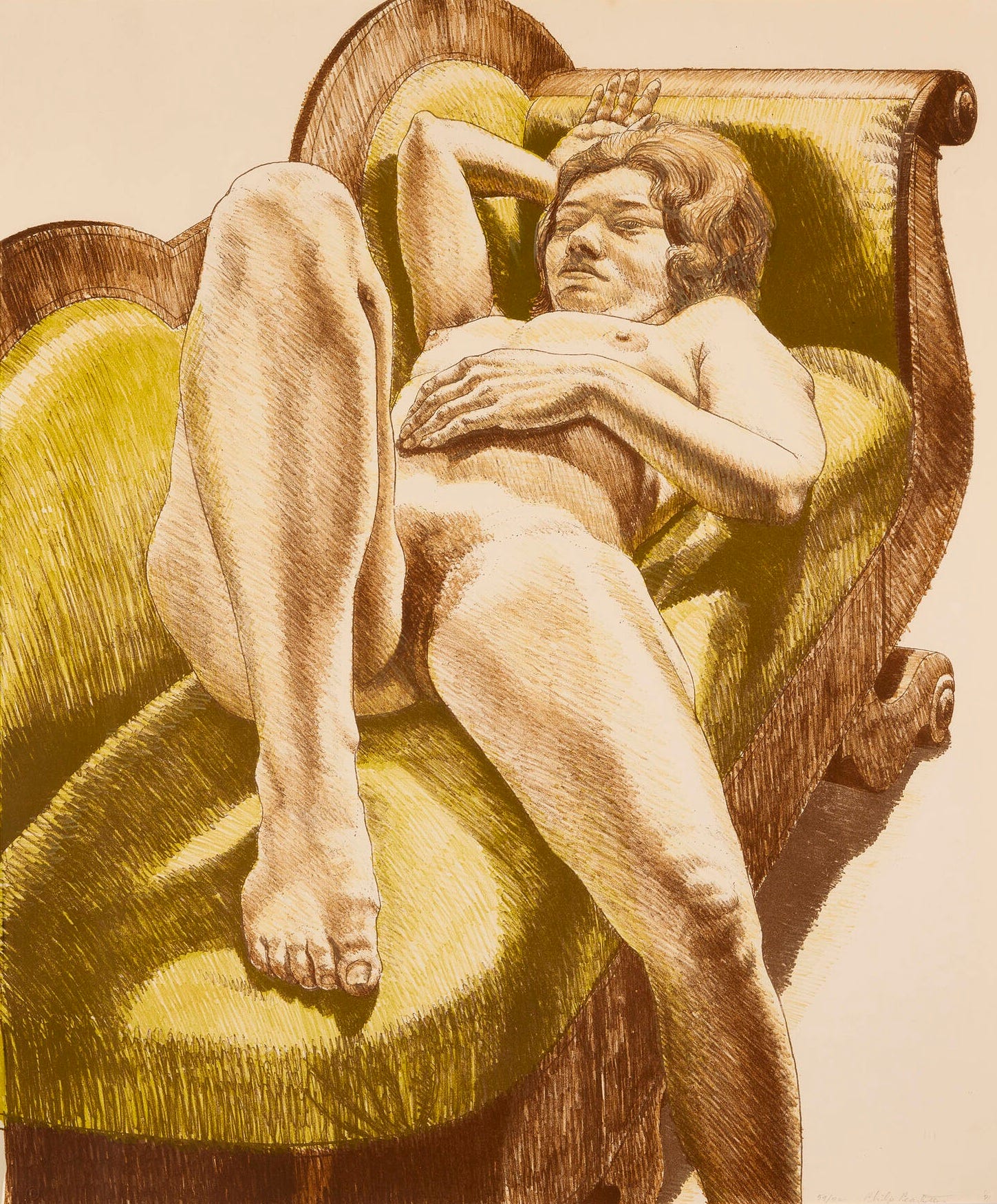
Philip Pearlstein, perhaps the great Reclining Nude Artist of the second half of the 20th century, often showed models with legs crossed and elbows turned. This is not a painting but a multicolor lithograph, a process detailed in the book The Painting and Teaching of Philip Pearlstein.
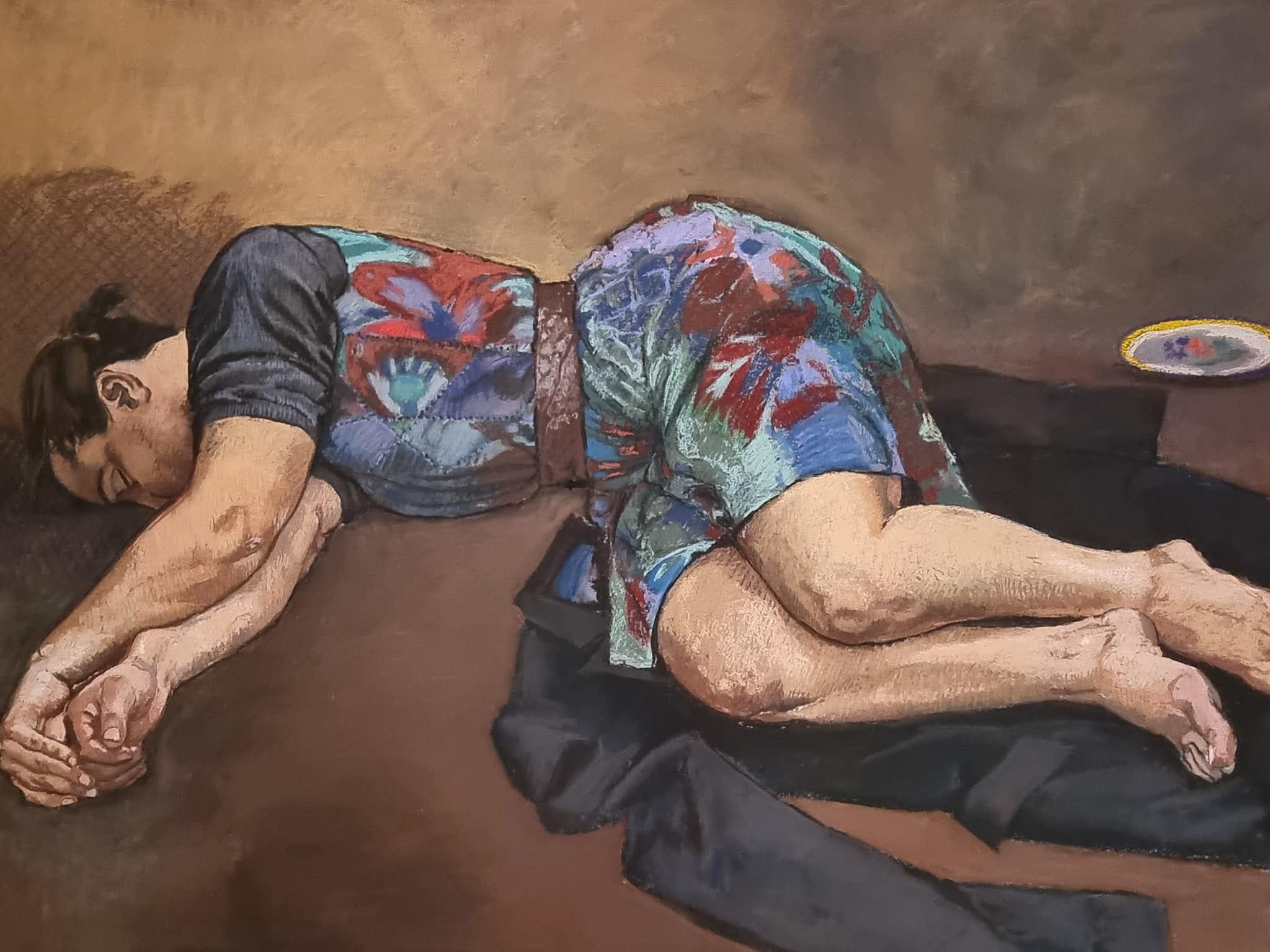
Paula Rego painted this sleeping woman in 1994.
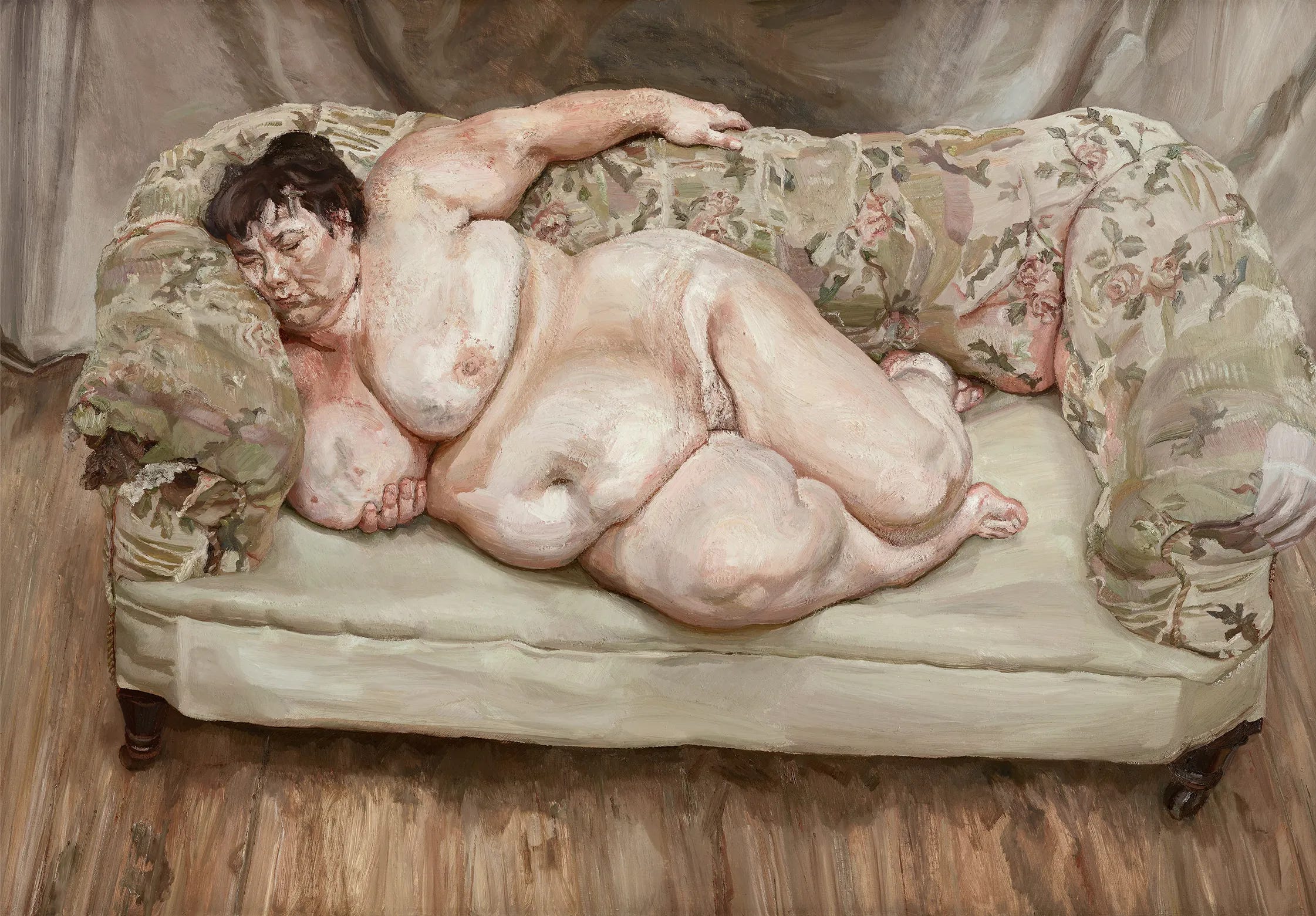
Always one-of-a-kind: Lucian Freud, Benefits Supervisor Sleeping from 1995.
Noah Davis, Untitled from 2010, in oil on linen. He really was a spectacular painter.
Al Hirschfeld’s drawing of the humorist S.J. Perelman.
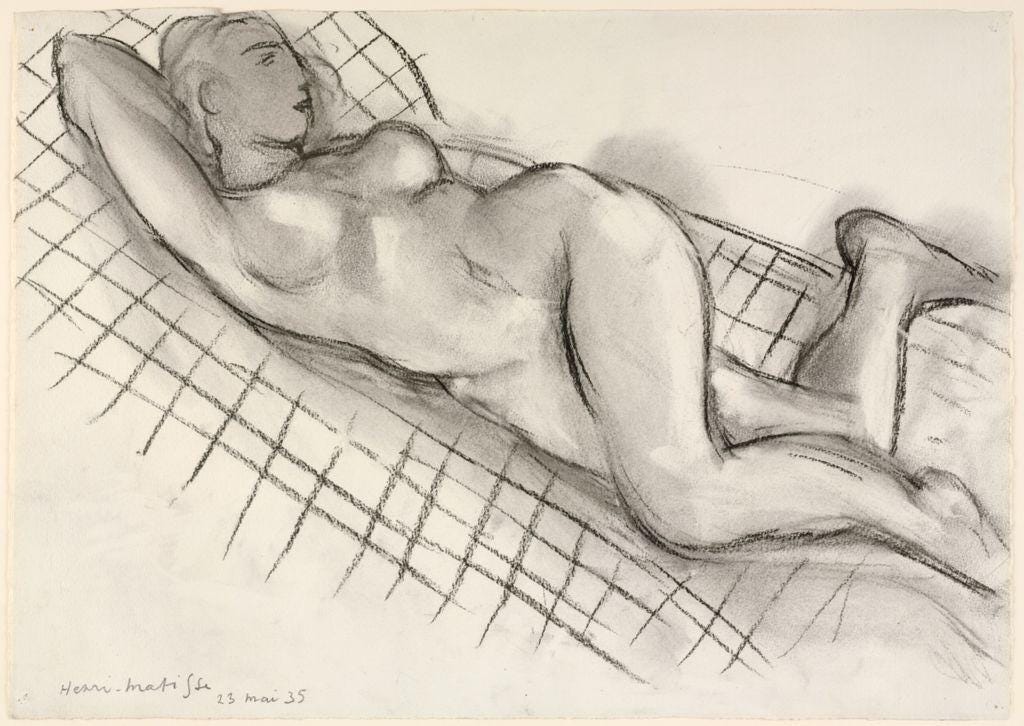
When Matisse painted this pose from the opposite side, seduction seemed harder to avoid. The woman seemed to be more on display and vulnerable than when viewed from the other side. Perhaps this emphasizes how empowered the original pose is, with legs crossed and arms flexed.
Still, even when seen from behind, the figure’s legs and arms bulge as if she were taken from Michelangelo’s frescoes, and her short hair adds to the androgynous feeling. Matisse appears less interested in a sexualized subject than an animated one: with blurred charcoal lines radiating from her leg and arm, it’s as if she has just spun forcefully around to look back at us.
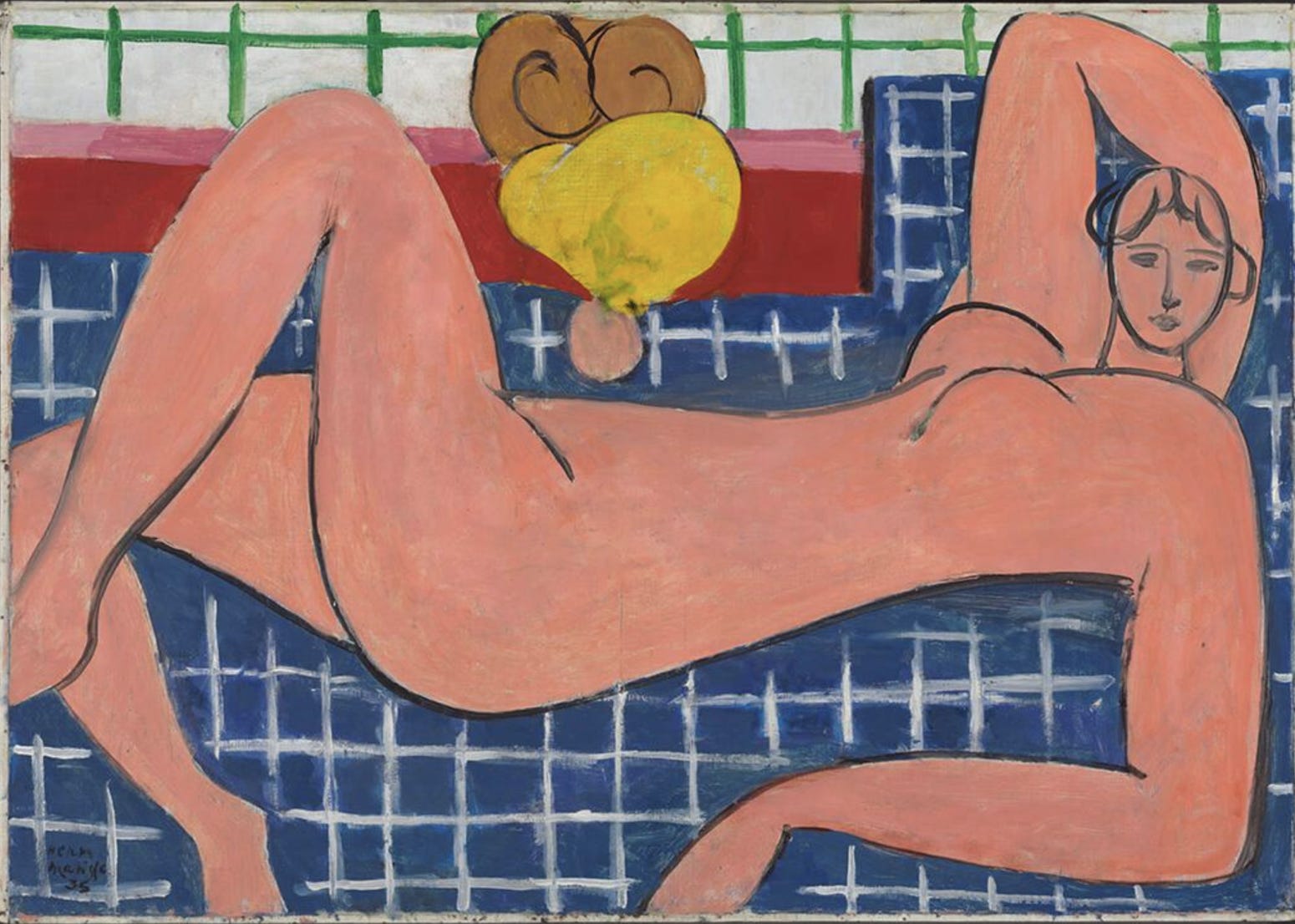
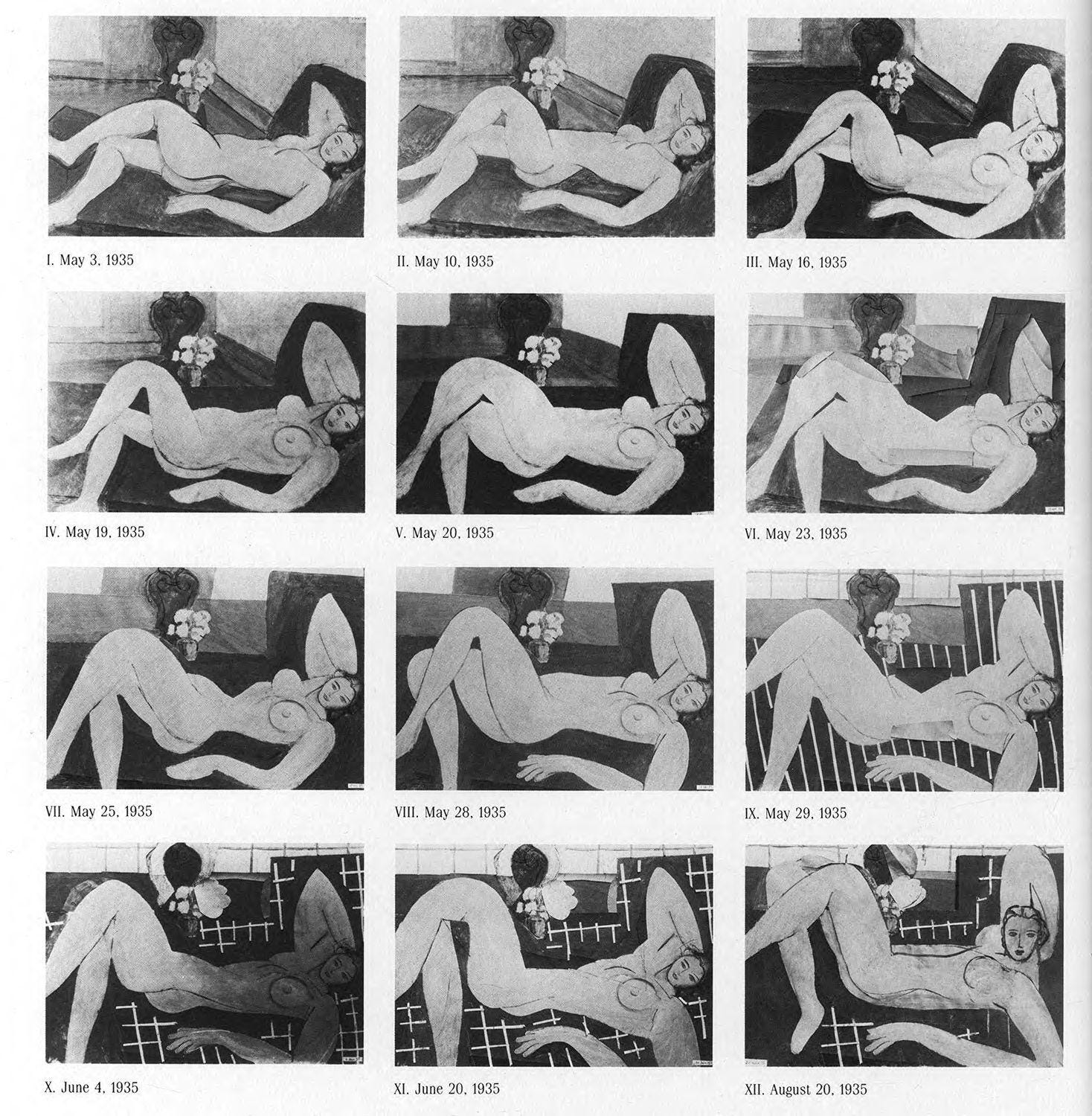
The final painting, which went through many iterations, captured in the photographs that follow.
A charcoal study for Large Reclining Nude, 1935, often called the Pink Nude.
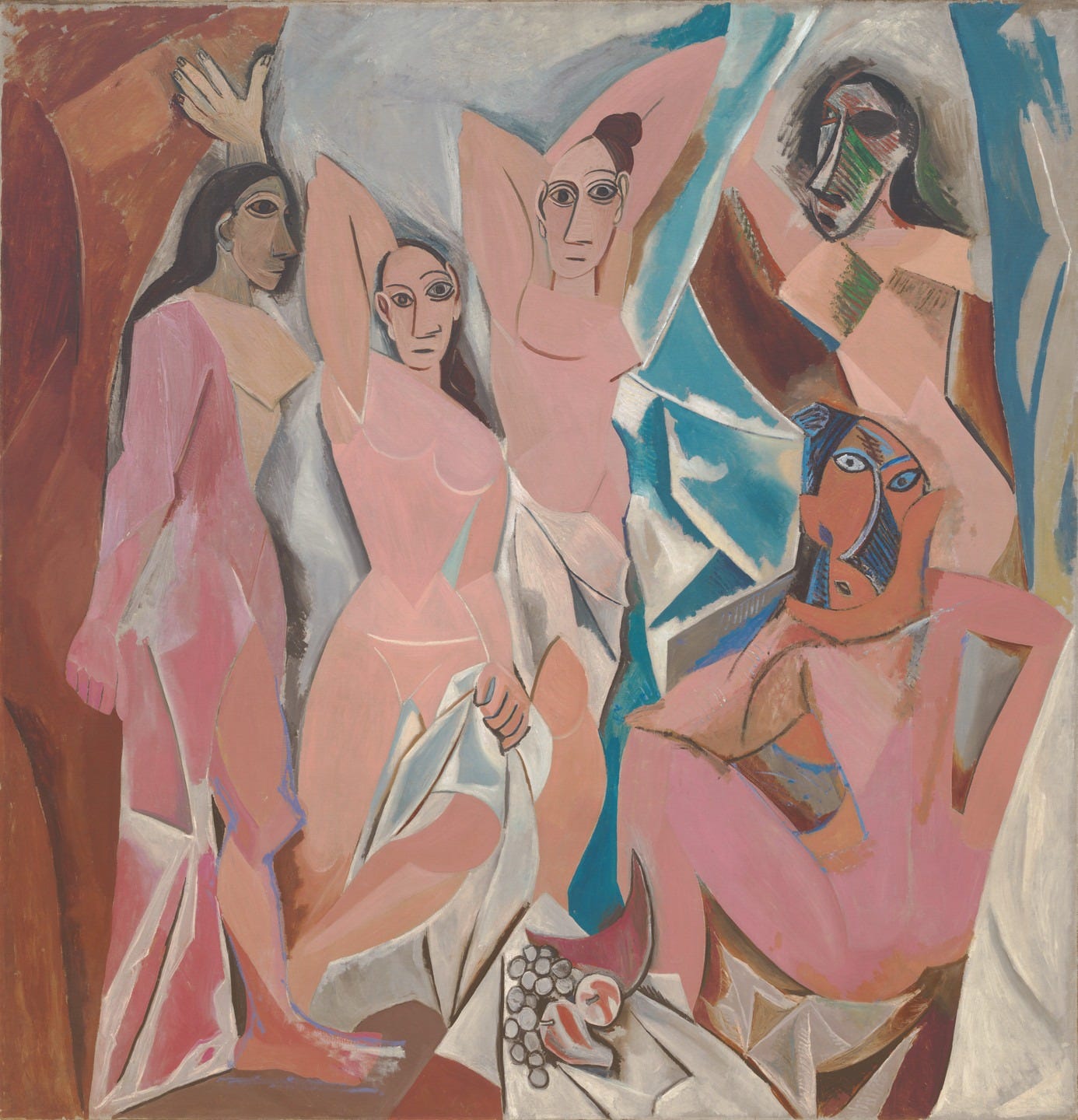
As for eraser-pink bodies: Why not some Picasso? Elbows up, angular bodies, African influence. If you rotate the image 90 degrees to the left, you can see how the two central figures would look if they were reclining nudes. This 1907 work was shown to friends and patrons, like Leo Stein (who knew Matisse well), and went on public display for the first time in 1916 at a gallery in Paris.
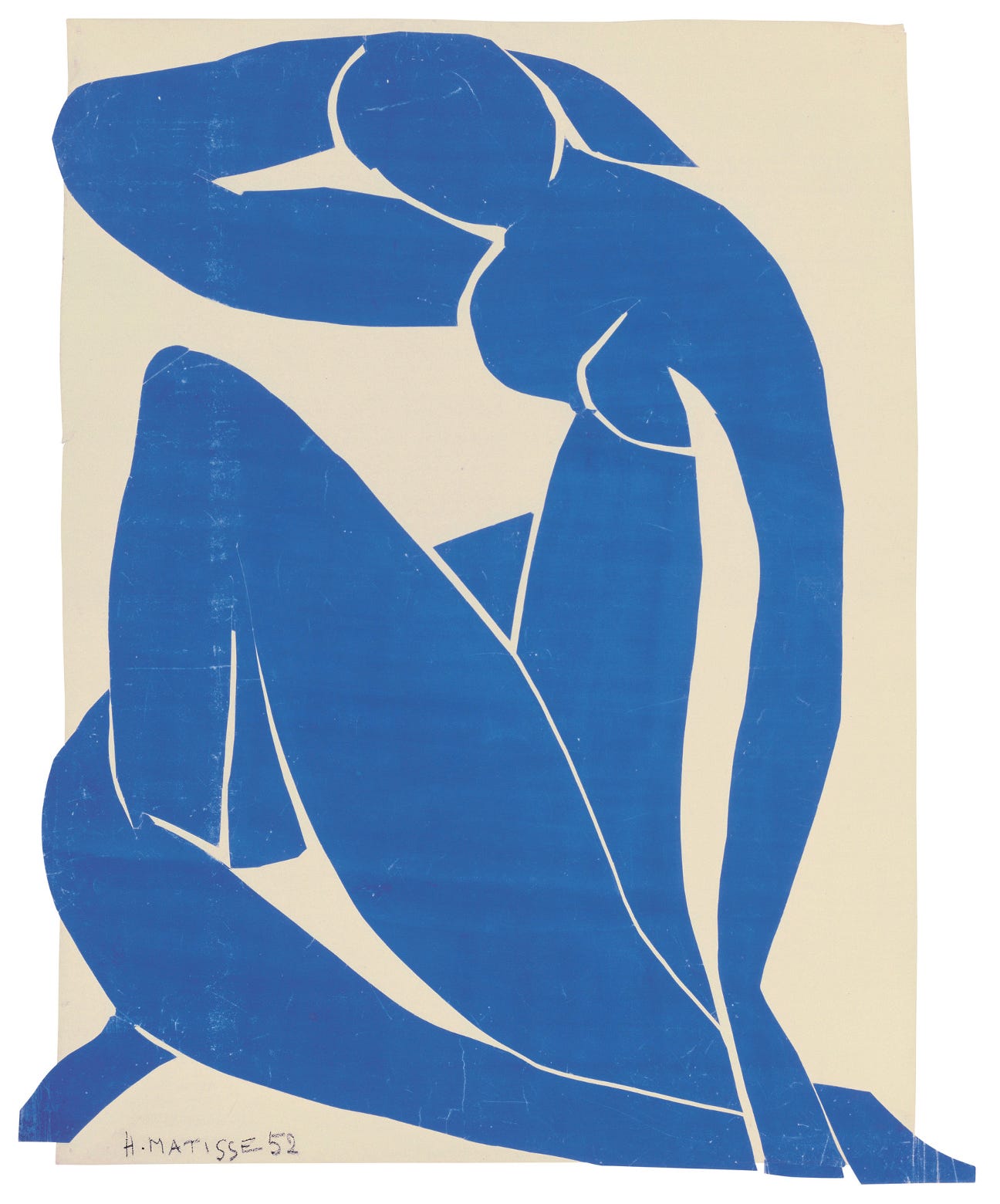
Blue Nude II, 1952, a gouache paper cut out. The figure appears to sit upright, but when the piece is rotated on its side, we can see that this, too, is a model in Matisse’s favorite pose.
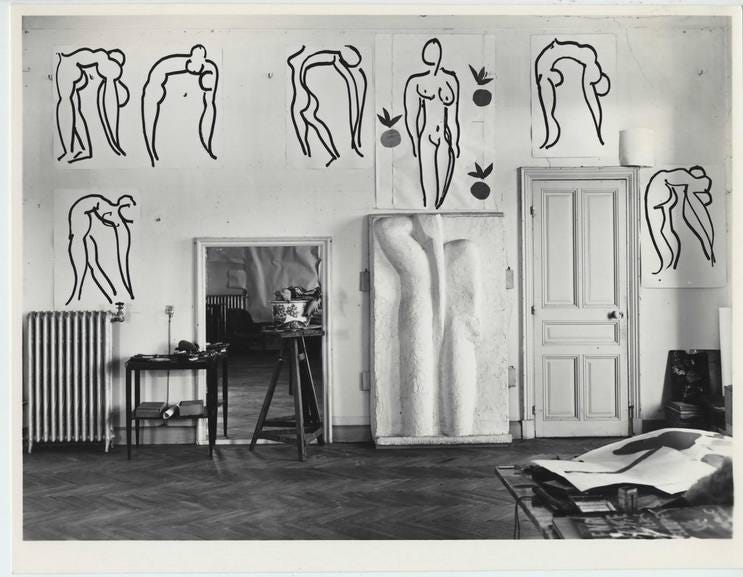
1953: Figures line the walls in Matisse’s studio, Hôtel Régina, Nice, France.
His 1935 Large Reclining Nude tweaks the pose by reversing the legs—left bending backward over the right—a contortion that allowed him to fill the top left of canvas and balance the painting. While it’s tempting to assume that he started with the classic pose and switched the legs over time, a series of in-progress photographs reveals that the canvas started with the legs in their final position.
This modified version made its way into one of Matisse’s late masterpieces: the Blue Nude. This figure was assembled from slices of paper painted in gouache by studio manager Lydia Delectorskaya and her assistants. This figure appears to be sitting upright, thanks to the composition having a vertical orientation, but when rotated on its side we can see that the figure is in fact a reclining nude in Matisse’s favorite pose.
As a genre, the reclining nude often lulls an artist into painting a sedate scene. Active artist, passive model. The artist acts, the model appears. But with this pose, perhaps through its sheer weirdness, Matisse found a way to stretch and twist his figures into something bizarrely beautiful, winding them up like contraptions that could burst or snatch or shoot off into the sky at any moment. To the extent that they are Siren songs, they sing not to lure you in, but to warn you of their power.
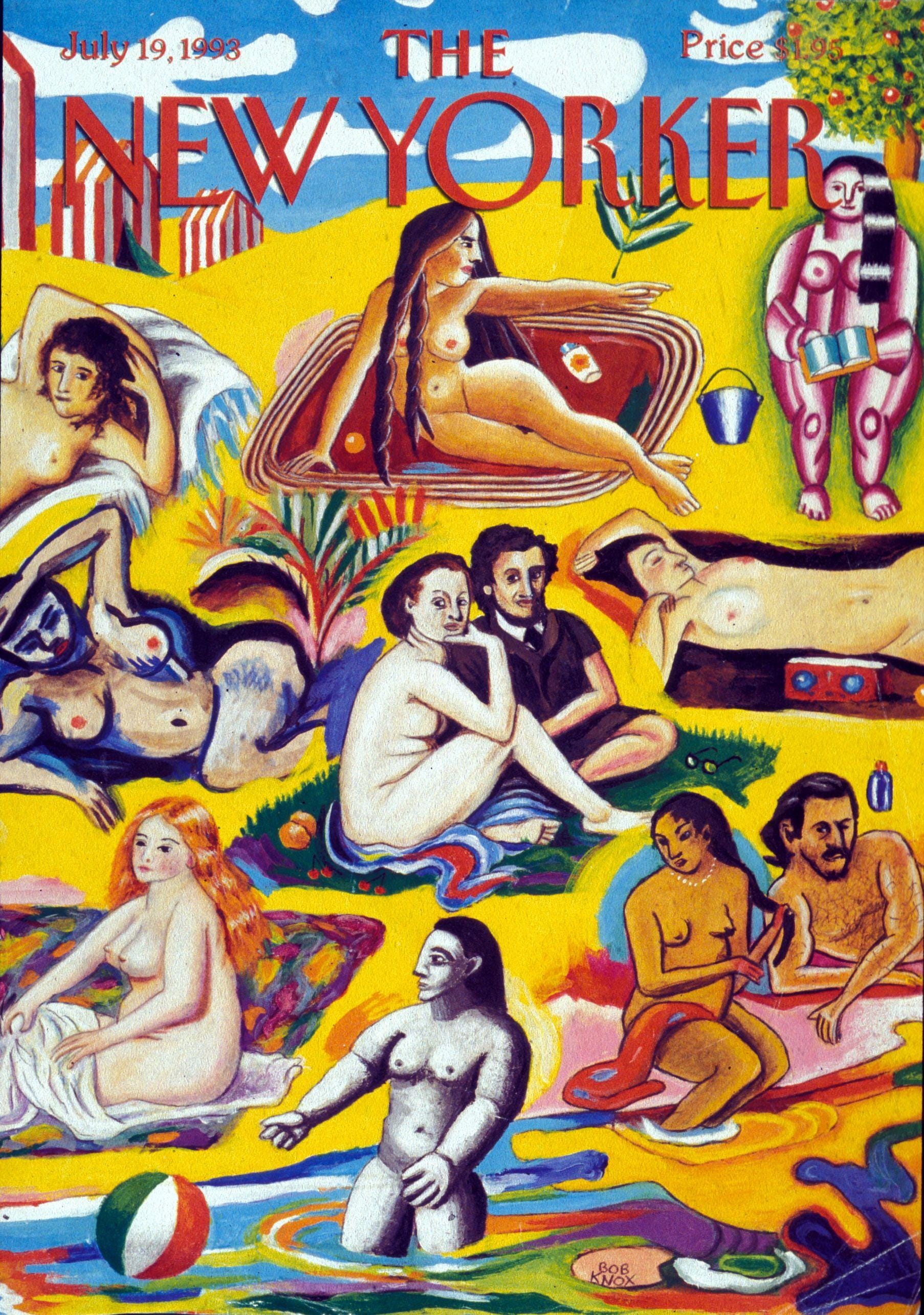
A good place to wrap up: the July 19, 1993 cover of The New Yorker features Matisse’s signature pose by quoting The Blue Nude, at center left (below Goya, above Renoir, and to the left of Manet).
© Words Quinn Russell Brown 2026; Image Rights as Credited