
With the 2023–24 show 1898: U.S. Imperial Visions and Revisions, the National Portrait Gallery put the spotlight on the pivotal year of the Spanish-American War. This imperial clash was the first time that the U.S. aimed its military outside of the Western Hemisphere, challenging a European power over territory and further blurring the line between being a republic and an empire. This was the moment the U.S. claimed control of Puerto Rico, Hawai’i, and Guam, as well as began meddling in the Philippines and Cuba.
Like all National Portrait Gallery shows, 1898 takes place at the intersection of American art, history, and politics. I talked about touring this overlooked chapter of American history with Taína Caragol, the National Portrait Gallery’s first curator and historian of Latinx and Caribbean art, and Kate Clark Lemay, a curator specializing in art’s role in history and public memory.
Quinn Russell Brown: This is a period in American history that’s often passed over in history class, lost between the Civil War and Reconstruction on one side, and World War I on the other. Why do a whole show about 1898?
Taína Caragol: As a year of territorial expansion for the U.S., it puts into question, “What is American art?” That doesn’t mean that we should impose the word “American” on all of these places and all of these artists, but we should consider how these artists, from different places, responded to this year.
As a Puerto Rican, 1898 is the year that connects my history to the United States. I came to the National Portrait Gallery in 2013 as the first curator of Latino art and history, and the institution brought me in because there was an absence of Latino portraits, Latino artists, and Latino histories. As a curator, I’ve tried to rectify that through collecting and exhibitions. But something was still missing: to address key moments at which Latinos had become foundational to the U.S., and 1898 is one of those.
We identified three important geopolitical events. The first is what we call The War of 1898. It’s referred to as the Spanish-American War in the U.S., but we neutralized the name to make space for all of the countries, islands, and archipelagos that were affected. The second geopolitical event is the U.S. joint resolution to annex Hawai’i, in July 1898. And the third is the Philippine-American War, which started in 1899 as a consequence of the larger war. The U.S. did not recognize the claim to independence by the Philippines.
QRB: The show is very direct about imperialism and America’s role in it. I’m sure we can assume that the Smithsonian was in some way associated with these events, and especially in shaping the narratives around them. How does your museum navigate being part of the critical re-evaluation of this history?
Kate Clarke Lemay: As a curator at a federal institution, this experience has been about taking cautious steps. Getting these loans was not straightforward. There is a lot of painful history. People kept telling me that in the Philippines, 1898 is not a year that they want to remember.
We knew that we had to be upfront about the role the Smithsonian played in collecting from the new territories and disseminating knowledge about the territories. From today’s perspective, a lot of what the institution did was suspect, or in some cases, full of mistakes.
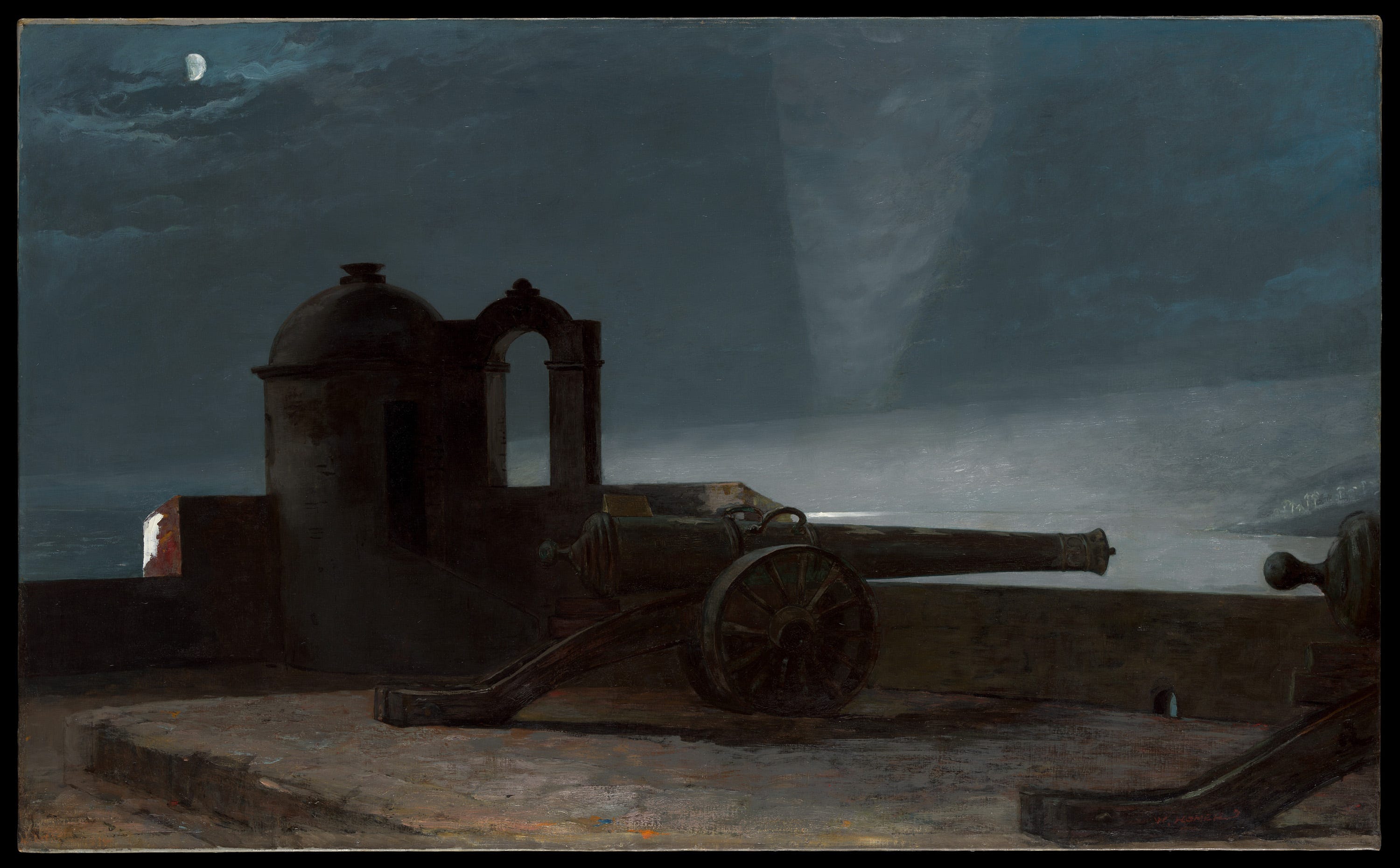
We’ve had support from our colleagues, but sometimes in institutions you run up against a wall. Some curators are not ready to look at the imperial practices of their collections. But it’s a huge process. We can’t do all of that in this exhibition, but we can provide an example of how to begin that conversation.
For visitors who don’t have time to read 800 books about a topic, art can be a quicker way to experience it. If you consider portraiture as a primary source to understand a person, art offers a new angle and a new interpretation. In order for us to tell a more complete story, American art is not the driving vehicle in this show. Instead, American art is put into conversation with Cuban art, and art from other places.
TC: I’m interested in how institutions generate knowledge. How do we take that national framework of the National Portrait Gallery to ask: How is the nation made bigger or smaller? Does bigger territorially also mean bigger socially or politically? Does this moment of expansion in 1898 make the nation—the nation that the National Portrait Gallery represents—into something else? Does it make the republic into an empire?
Our model was a panoramic and comparative approach to this history. We made an effort to decenter the U.S. triumphalist narrative. We tried to give room to the different perspectives that analyze this history.
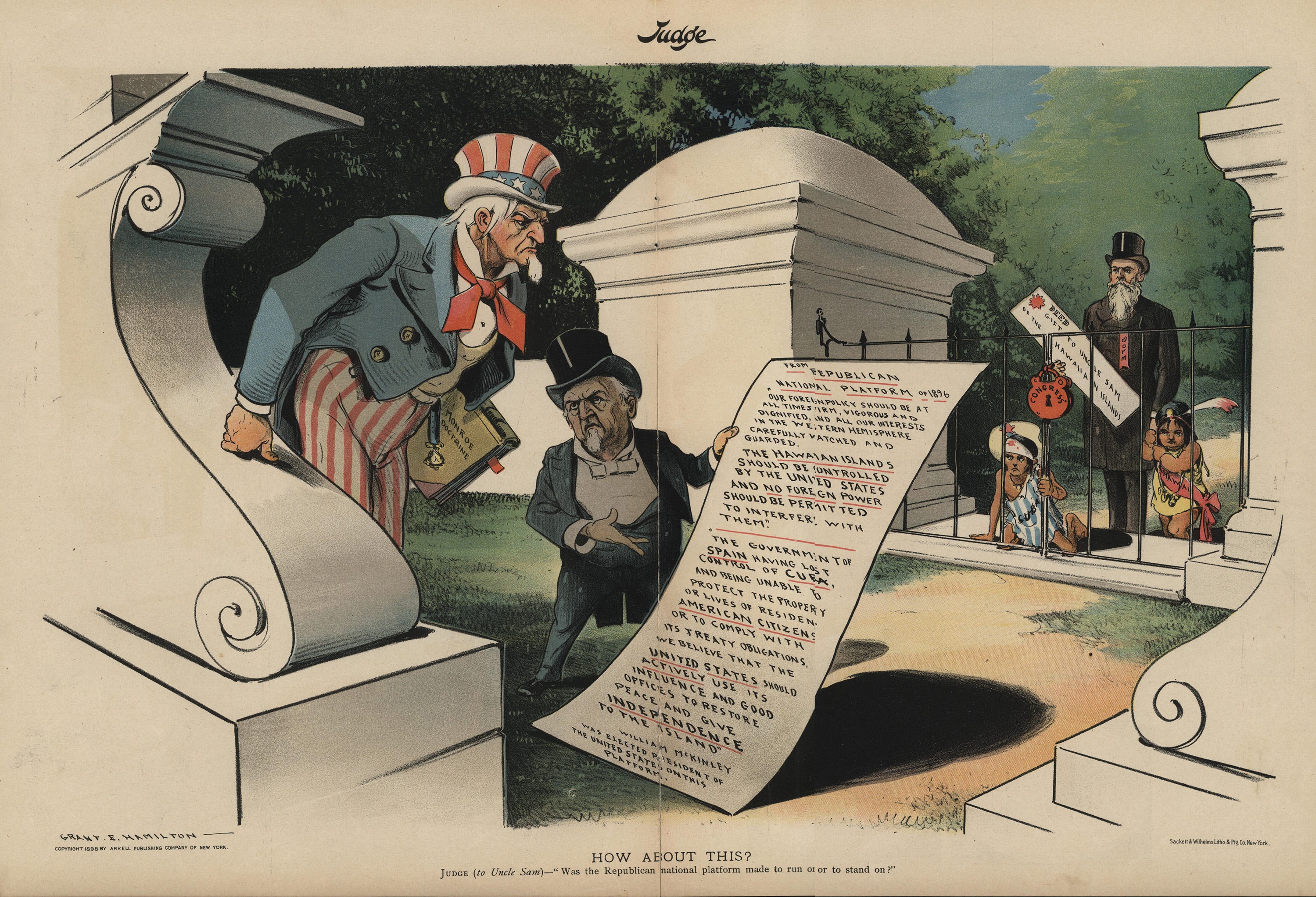
“We have a handkerchief in the Cuba section, with portraits of the revolutionary leaders of the 1895 Cuban War of Independence. It was a souvenir from the 1896 Grand Cuban-American Fair at Madison Square Garden, which generated support for the cause of Cuban independence. It’s an object that conveys the Cuban decolonial struggle beyond the island of Cuba.”
–Taína Caragol
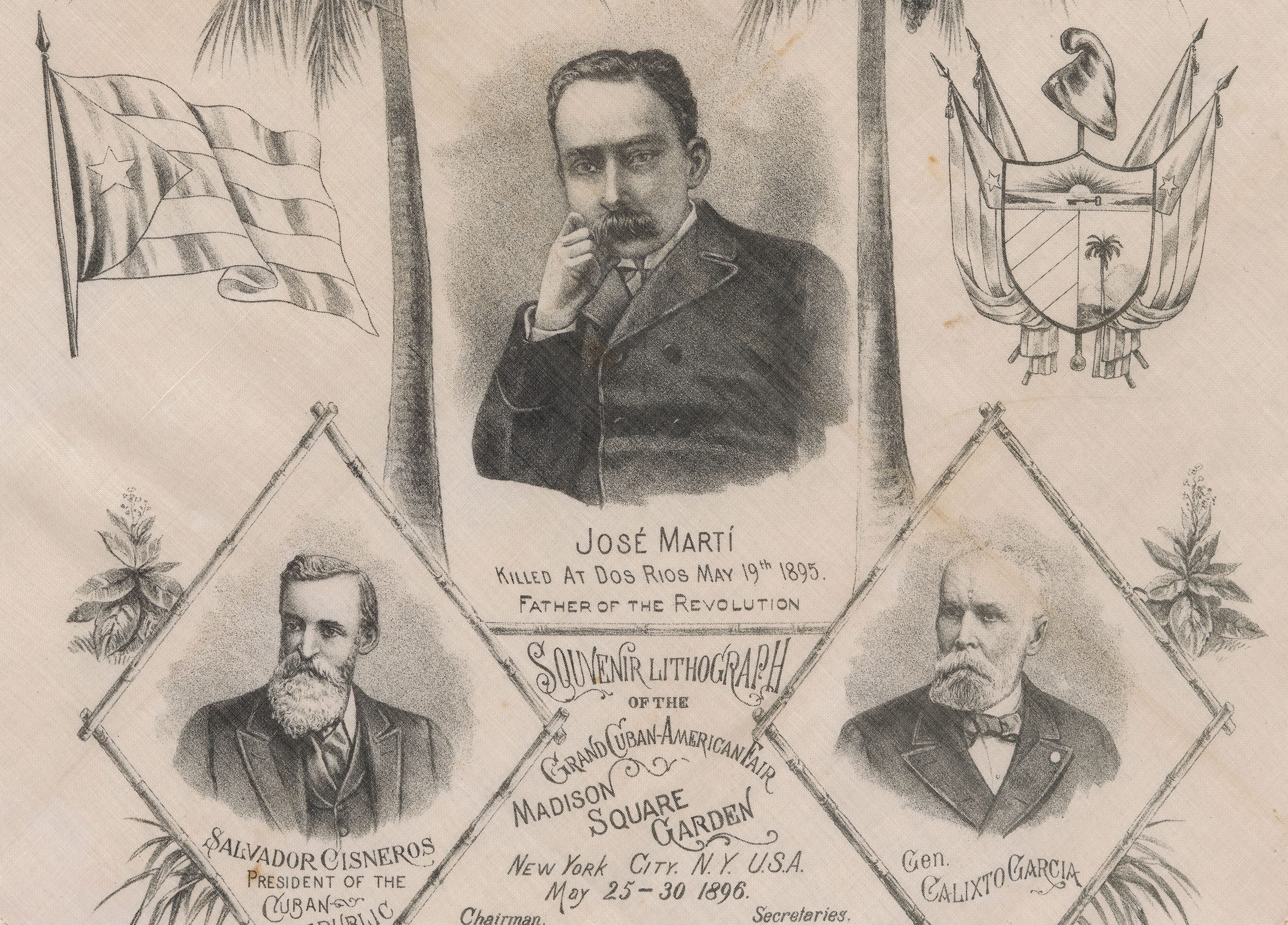
QRB: Can you each tell me about an object in the show?
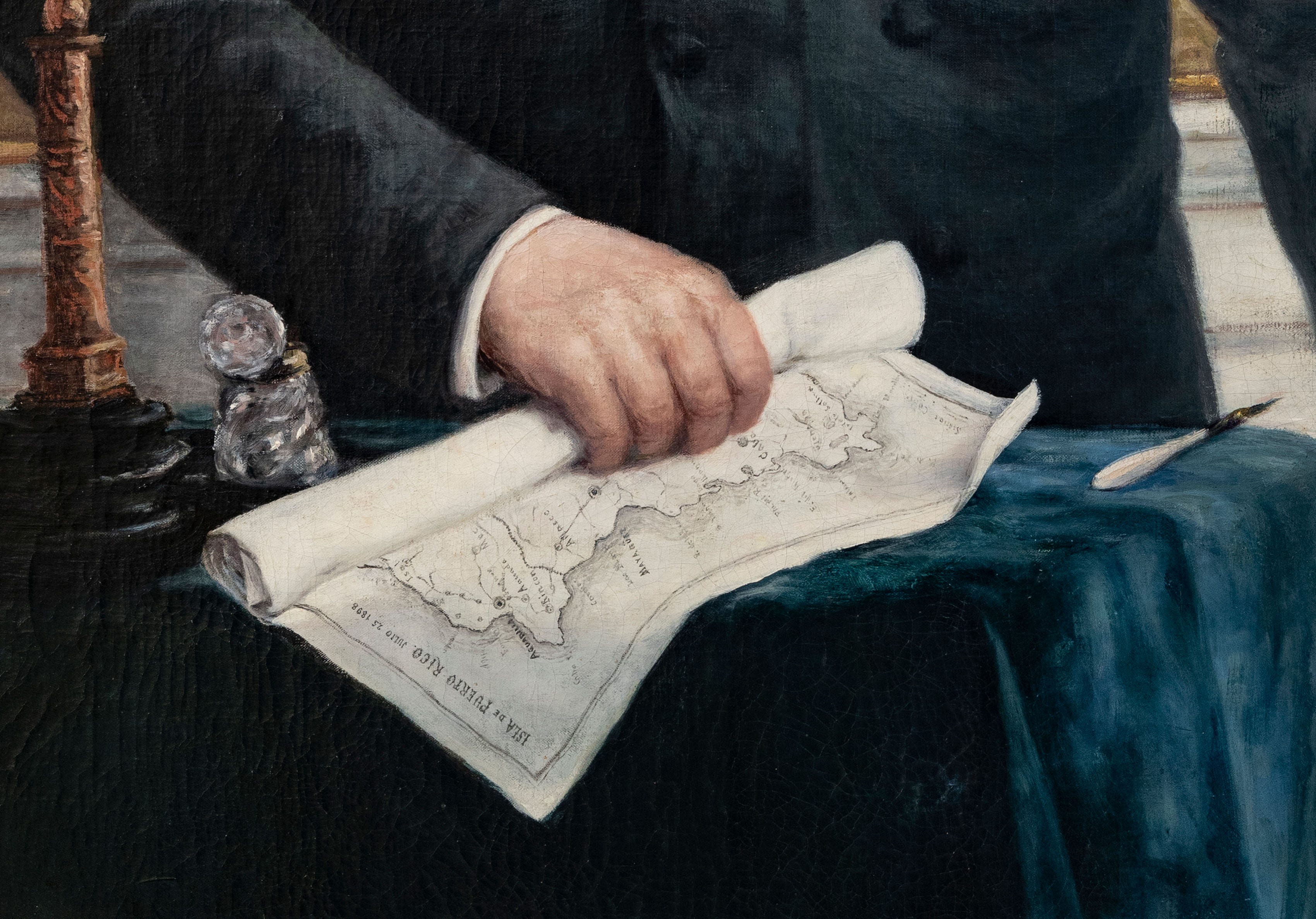
TC: I’m fascinated with the portrait of President William McKinley by Francisco Oller, an artist who wanted to create an iconography of Puerto Rican identity. In 1898, Oller worked from a photograph to paint a portrait showing McKinley as the new head of state of Puerto Rico. McKinley holds a map of Puerto Rico, and there are two dates on the painting: One is July 5, 1898, the day of the invasion of Puerto Rico by the U.S., and the other is October 18, 1898, the day Spain transferred power of the island to the U.S.
You could replace the map of Puerto Rico with any of the other territories—Guam, Hawai’i, even Cuba—and the meaning still holds: The future of these places was in the hands of McKinley, and of the U.S. The work functions as a literal statement of a transfer of power of Puerto Rico, but it also works as a metaphor for the geopolitical shape that 1898 brought.
As a Puerto Rican painter recording this moment, Oller understood how artists had to work in colonial settings to make a living. He sent this painting to the White House in 1900, to present himself as an official portraitist of the new regime. There is an attempt by all the artists in this show to create works that present themselves and their people as dignified, and worthy of being honored and memorialized, whether their lands were sovereign or not.
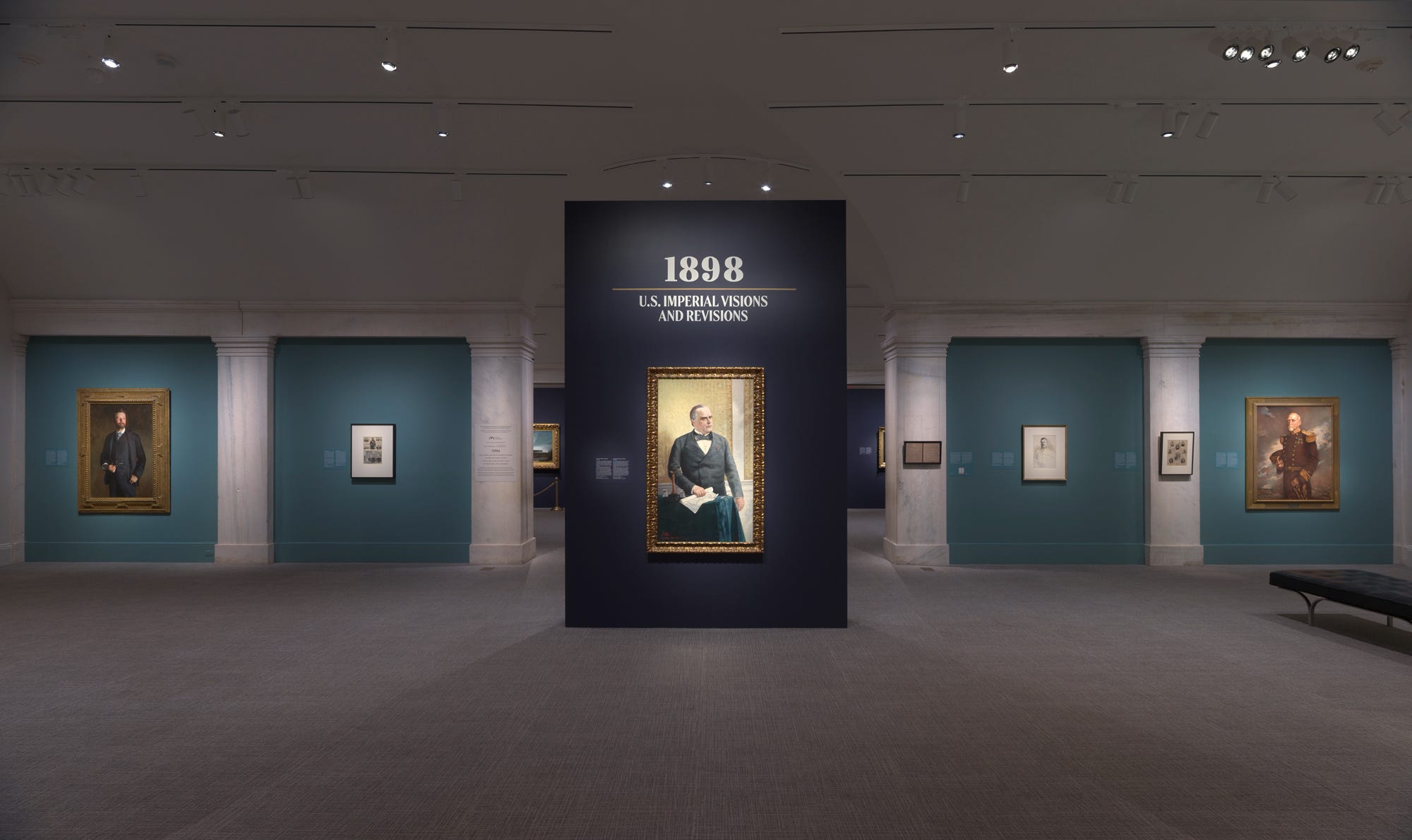
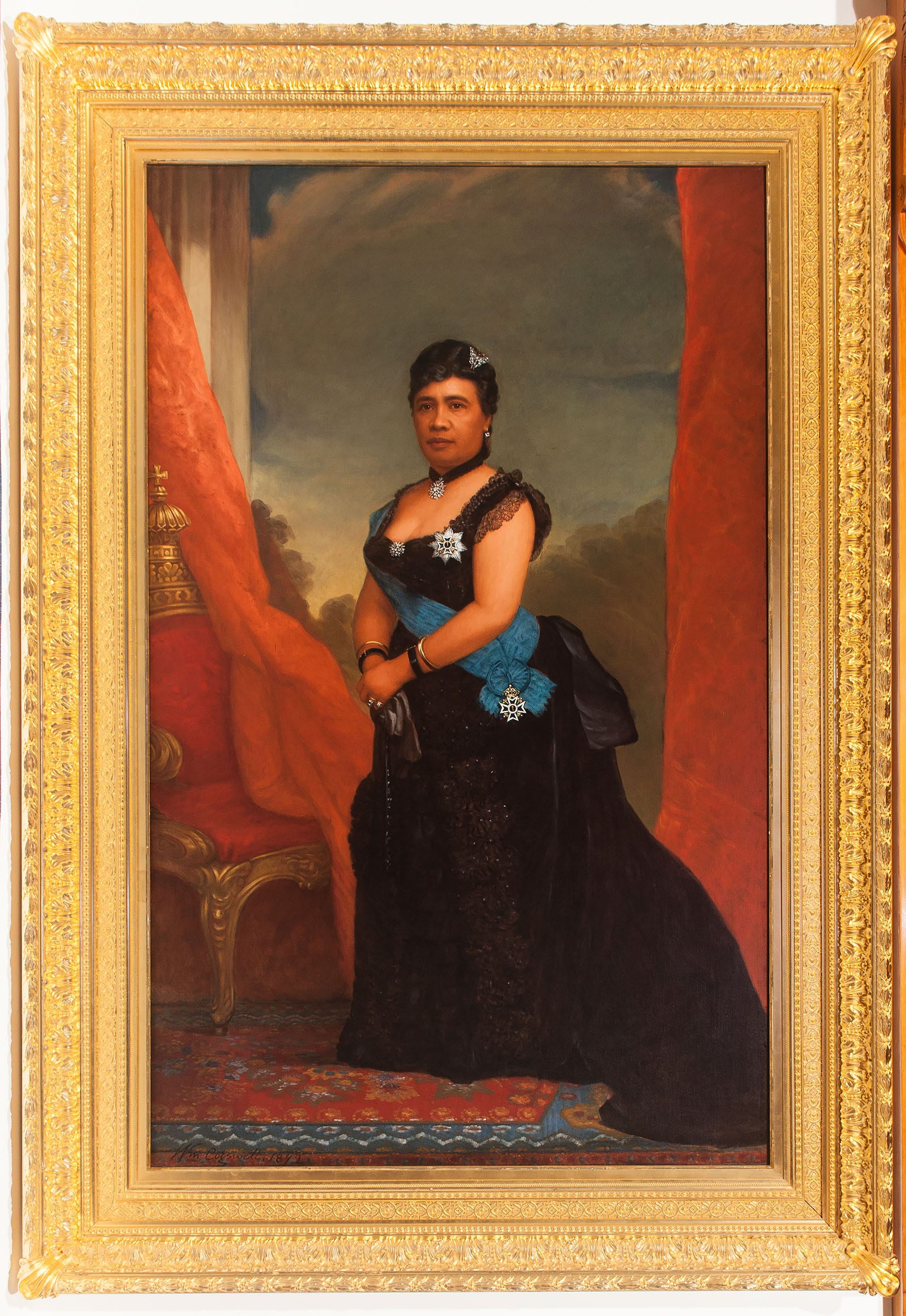
KCL: With the loan of the Portrait of Queen Lili`uokalani, some of the Native Hawaiians were very suspicious about loaning it, because they believe the portrait imbues her spirit to this day. We worked with five Royal Benevolent Societies in Hawai’i, and four of them supported the loan. The last one didn’t, because they didn’t think the exhibition made enough space to show Native Hawaiians were oppressed. That’s a fair point to make, because our exhibition is really just a conversation starter.
This is the first time the queen’s portrait has left Honolulu. When the portrait traveled here, she came with a delegation of people from Hawai’i, because it meant so much to them to have her back in Washington, D.C.—voicing their history.
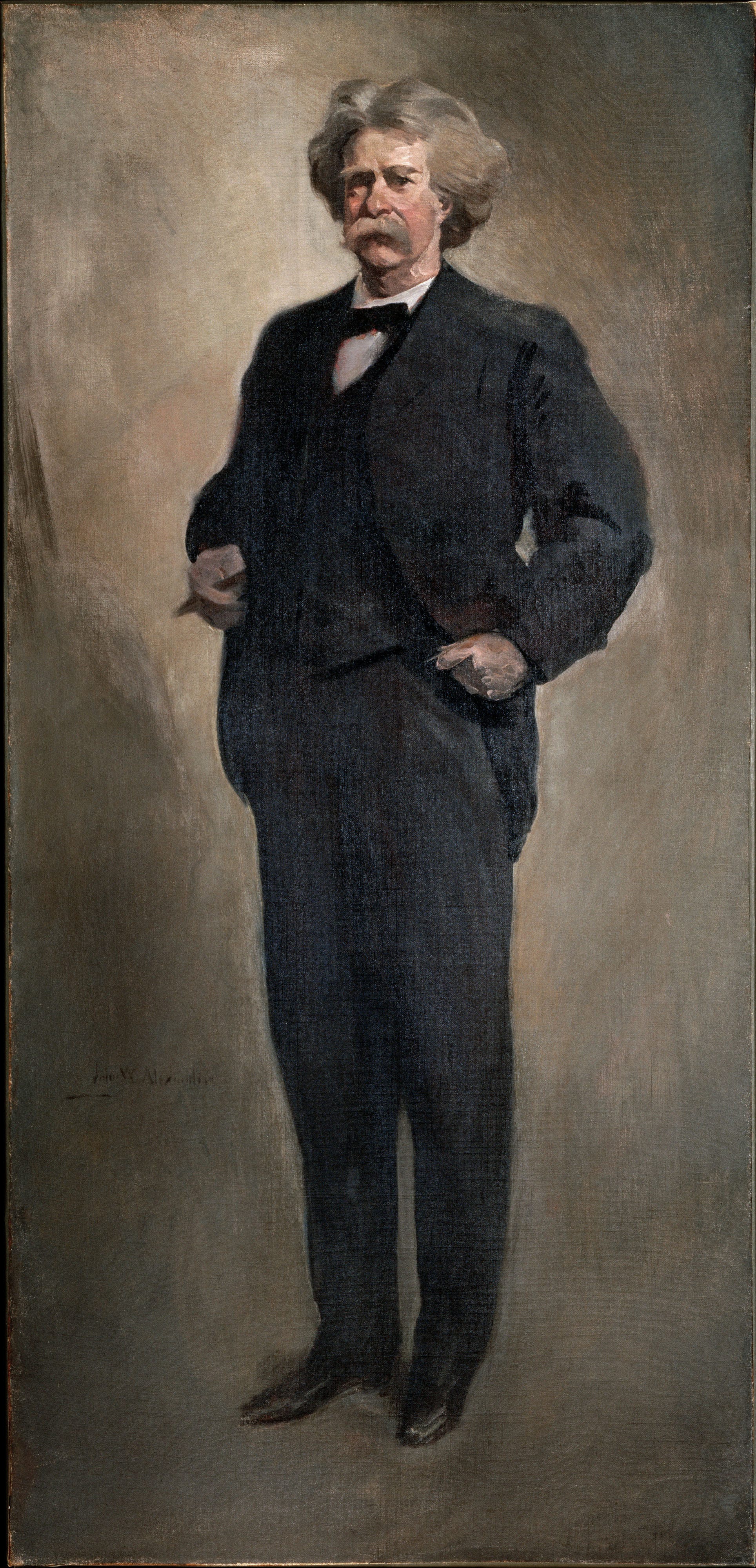
“I am opposed to having the eagle put its talons on any other land.” –Mark Twain, 1903
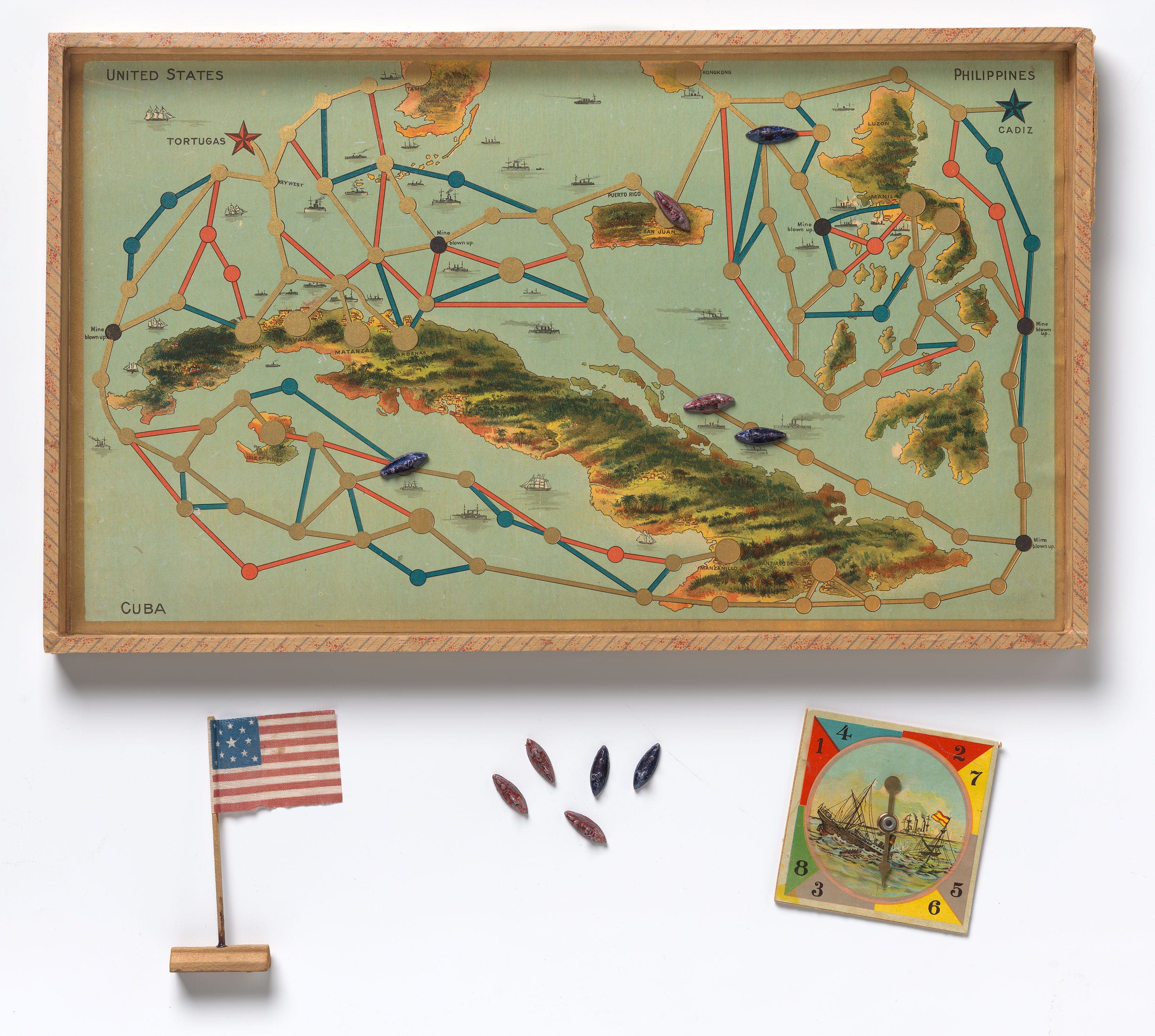
QRB: The show features oil paintings by heavy hitters like John Singer Sargent, Winslow Homer, and Frederic Remington. These are pretty traditional approaches to representing power and politics. But you also mix in vernacular imagery: posters, handkerchiefs, cigarette packaging, quilts, board games.
TC: Visual culture helps us think about this moment with concrete objects from everyday life. It helped us show how complex this political moment was. We have a handkerchief in the Cuba section, with portraits of the revolutionary leaders of the 1895 Cuban War of Independence. It was a souvenir from the 1896 Grand Cuban-American Fair at Madison Square Garden, which generated support for the cause of Cuban independence. It’s an object that conveys the Cuban decolonial struggle beyond the island of Cuba.
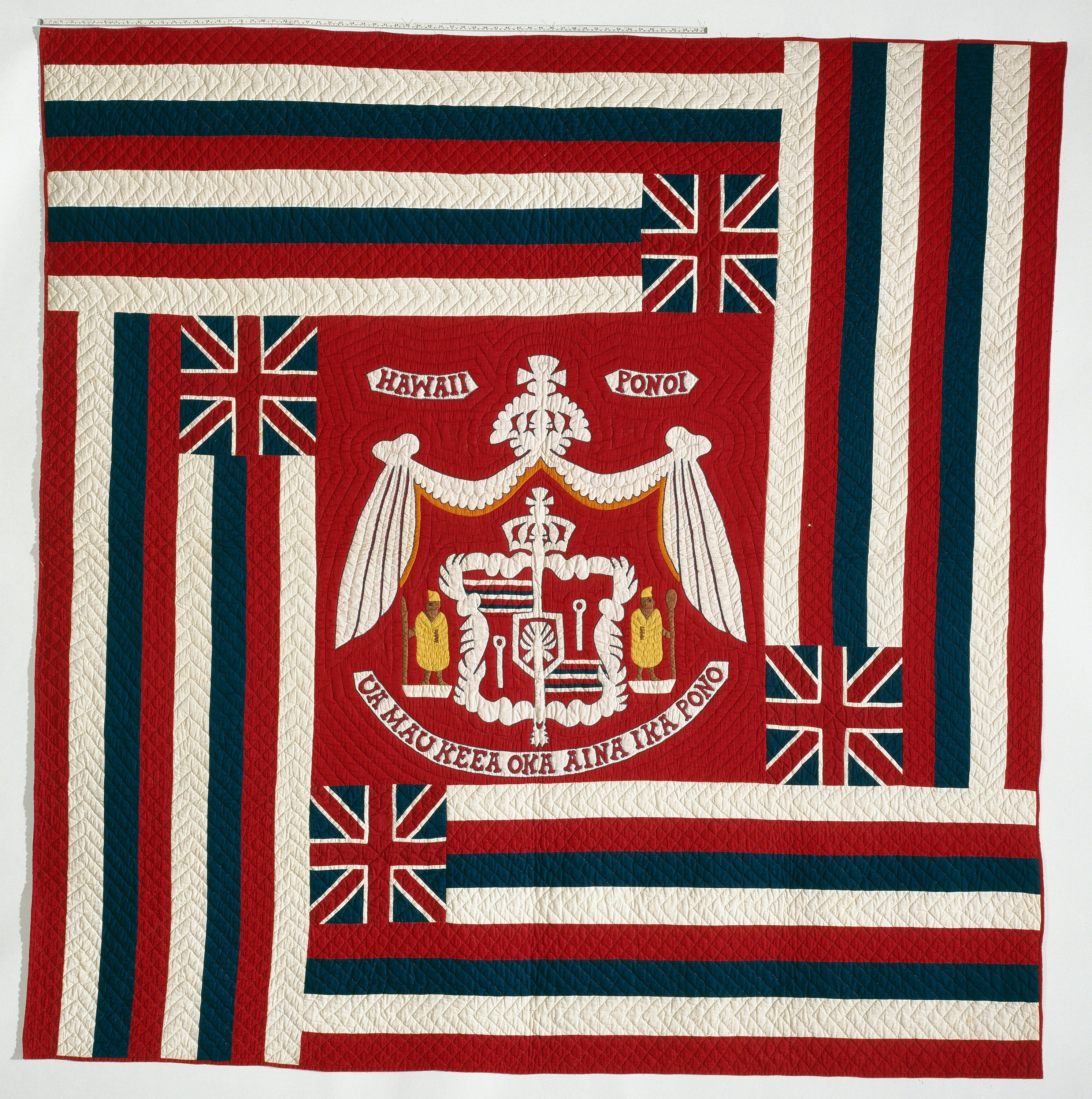
In a similar way, the Hawaiian Coat-of-Arms Quilt from 1898 represents the traditions of quilting turned political. It shows how personal the Queen’s dethroning must have been, because this was an object displayed in the home. Personal, but also collective.
We haven’t talked about diaspora yet. Migrations come with colonization. Imperial actions often result in migrations that outlive those imperial relations. The year 1898 created a whole new circuit of immigration, both between the U.S. and the lands that it seized, and between those lands with each other. The first big immigration that came out of this was Puerto Ricans moving to Hawai’i to work in the sugar fields.
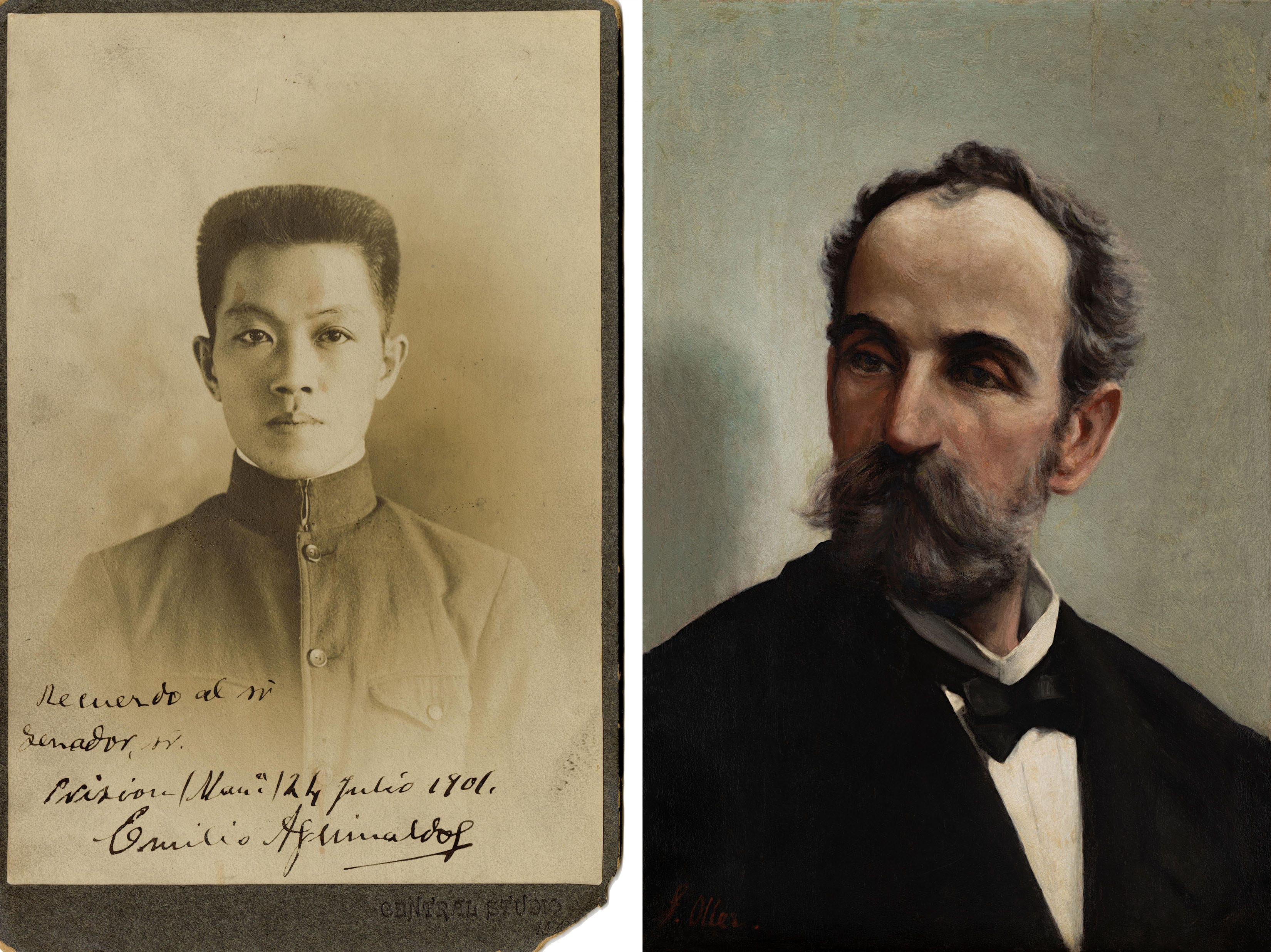
“For people who don’t have time to read 800 books about a topic, art can be a quicker way to experience it. If you consider portraiture as a primary source to understand a person, art offers a new angle and a new interpretation.”
–Kate Clarke Lemay
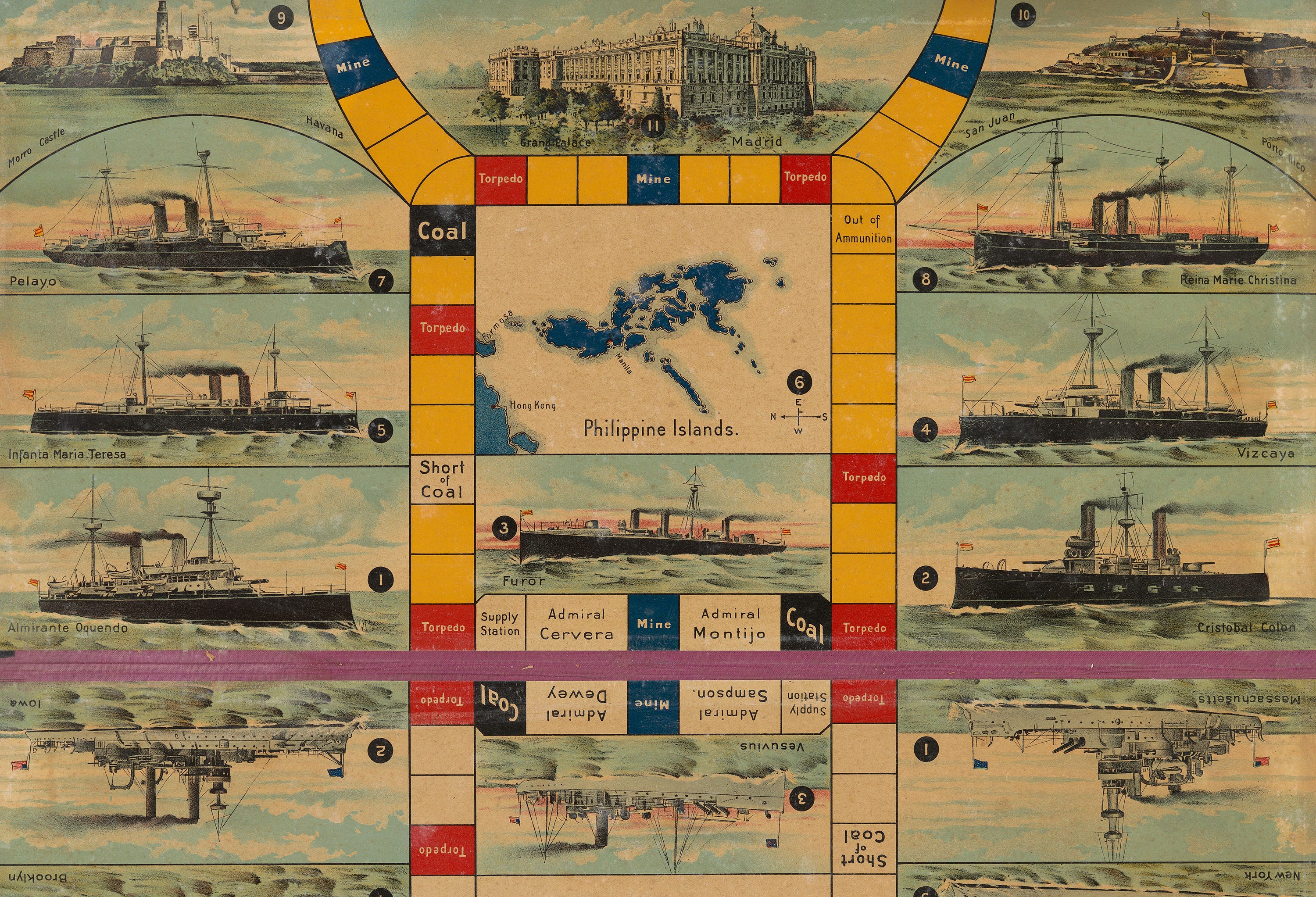
QRB: This exhibition is full of bright, colorful objects and richly rendered paintings. But there is a terror that goes along with all the beauty. How do we square that?
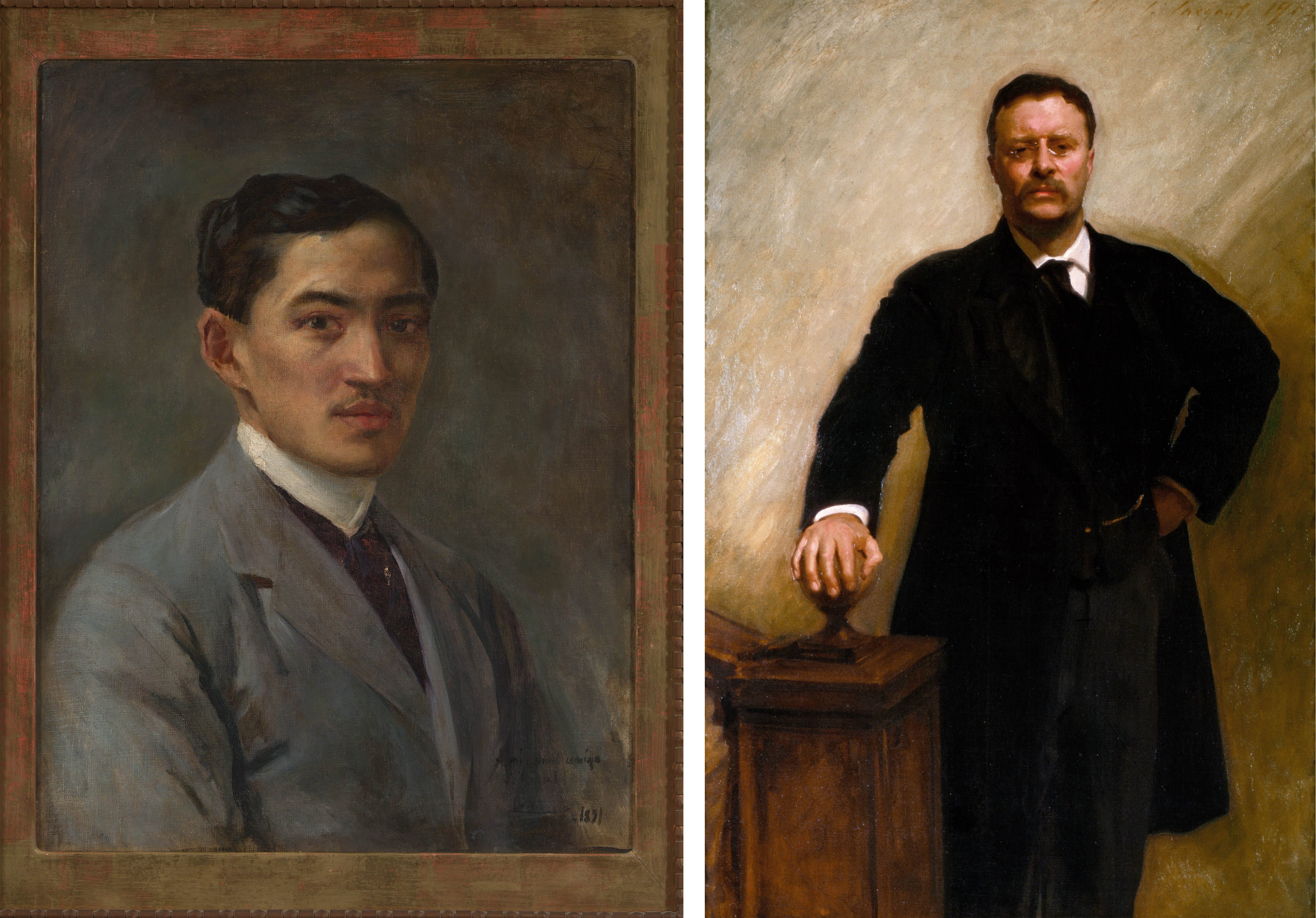
KCL: At the portrait gallery, we’re really a history museum that tells history through art and portraiture. This show can be challenging for people who want art for art’s sake. Alone, these are beautiful works of art, but when you put them together, a conversation unfolds. The more that you spend time with a beautiful portrait, you can start to get disgusted by it. But it does take close observation.
There is a lot of agency that’s shared when you put a portrait of [Filipino nationalist hero] José Rizal, by Juan Luna, next to a John Singer Sargent portrait of Teddy Roosevelt. They’re in conversation as equals. The subtlety in these painted portraits brings a humanity to them in a way that a photograph just doesn’t. There is so much work that these portraits accomplish in representing people who were part of the 1898 moment, and this show makes an argument for the portrait as an act of resistance.
“1898: U.S. Imperial Visions and Revisions” was on view from April 28, 2023 through February 25, 2024. Curatorial assistant Carolina Maestre also contributed to the show.
© Words Quinn Russell Brown 2024; Image Rights as Credited